By Vilma Mendonça, Registered Pharmacist (CRF-9930/RJ) Specialist in Phytotherapy and Homeopathy with 20 Years of Clinical Experience

It’s Not "Just Aging" It’s Biochemistry
Have you ever looked in the mirror and felt like your skin changed almost overnight? One year your favorite moisturizer worked wonders, and the next, your jawline felt less defined, fine lines appeared deeper, and your skin felt unusually dry or thin.
If you are over 45 and navigating perimenopause or menopause, this is not a coincidence, nor is it a personal failure of your skincare routine. What you are experiencing is a direct result of rapid biochemical changes inside your body.
As a clinical pharmacist, I often remind my patients: your skin is a living organ, and its structure is closely linked to your hormones. When hormone levels shift, the inner framework holding your skin and muscles firm begins to change.
In this guide, we will break down the science of menopausal collagen loss in plain, easy-to-understand terms. You will learn why creams alone aren’t enough, how specific foods act as internal “building blocks,” and how modern treatments like collagen biostimulators work.
Part 1: The Invisible Framework How Hormones Control Your Collagen "Factory"
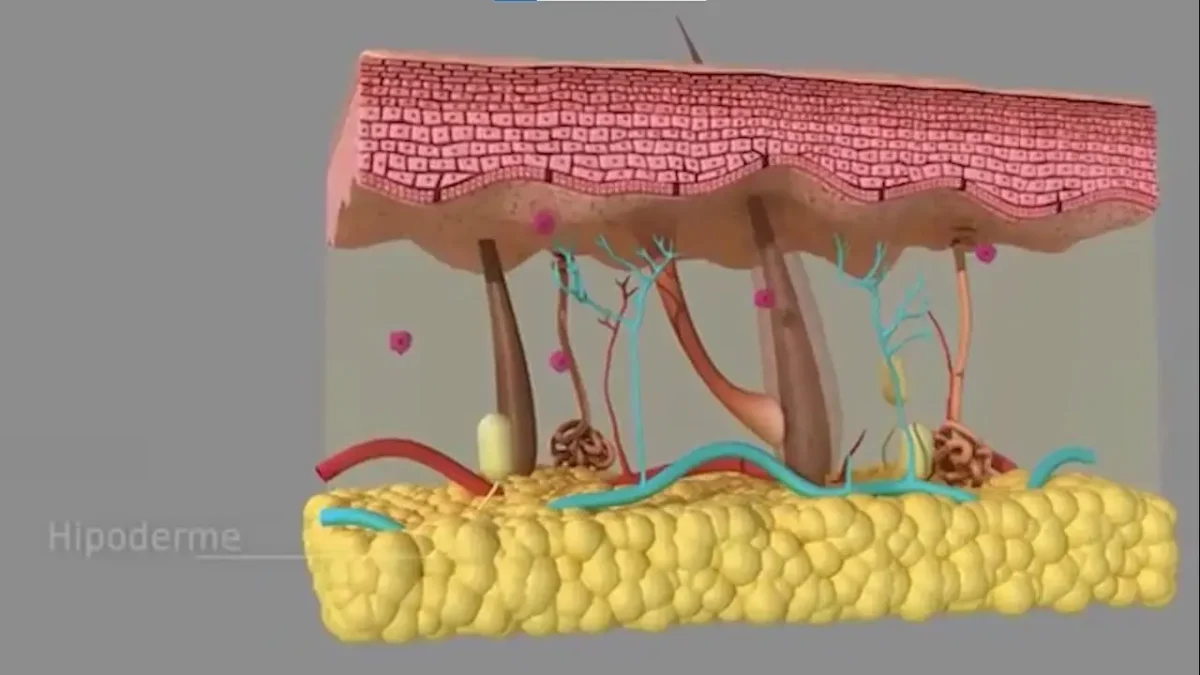
To understand why skin loses firmness, imagine your skin as a high-quality mattress:
- Collagen forms the inner springs that give the mattress structure, firmness, and bounce.
- Elastin acts like the elastic material that lets the mattress stretch and snap back into shape.
- Hyaluronic Acid is the internal sponge that holds onto water, keeping everything plump and hydrated.
Deep inside your skin, you have specialized cells called fibroblasts. Think of fibroblasts as tiny internal collagen factories. For decades, these factories work around the clock, producing fresh collagen to keep your skin smooth and strong.
What Happens During Menopause?
Estrogen acts as the “factory manager.” It delivers constant signals to your fibroblasts, telling them to keep manufacturing collagen and hyaluronic acid.
When you enter perimenopause and menopause, circulating estrogen levels drop significantly. Without its regular manager sending work orders, the collagen factory slows down dramatically:
- The Initial Drop: Research shows that women lose approximately 30% of their skin collagen in the first five years after menopause.
- The Gradual Decrease: After those initial five years, collagen continues to decline by about 2% every single year.
- Thinner Skin: Dermal thickness decreases by roughly 1.1% per year, making the skin feel more delicate, dry, and prone to bruising or fine lines.
Part 2: Beyond the Skin Hormonal Sarcopenia and Sagging Muscles
Many women assume that facial sagging is purely a skin problem. However, your skin does not float in isolation it rests directly on top of a foundation of muscle and facial fat pads.
Think of your muscle tone as a dining table, and your skin as the tablecloth:
- When the table is sturdy and broad, the tablecloth sits smooth and taut.
- If the table legs weaken or contract, the tablecloth naturally sags and folds, no matter how crisp or high-quality the cloth itself is.
Estrogen and Your Muscle Tissue
Estrogen is crucial for maintaining muscle health and cellular repair. As hormone levels drop, women experience a gradual decline in muscle mass and strength a process known as hormonal sarcopenia.
When the subtle muscles supporting your face, neck, jawline, and inner arms lose their tone, the skin resting over them loses its underlying support. This is why topically applying a tightening cream to the surface cannot lift sagging tissue on its own; true structural restoration requires addressing both the dermis and underlying nutrient support.
Part 3: Feeding Your Collagen Engine The Essential Nutrition Guide
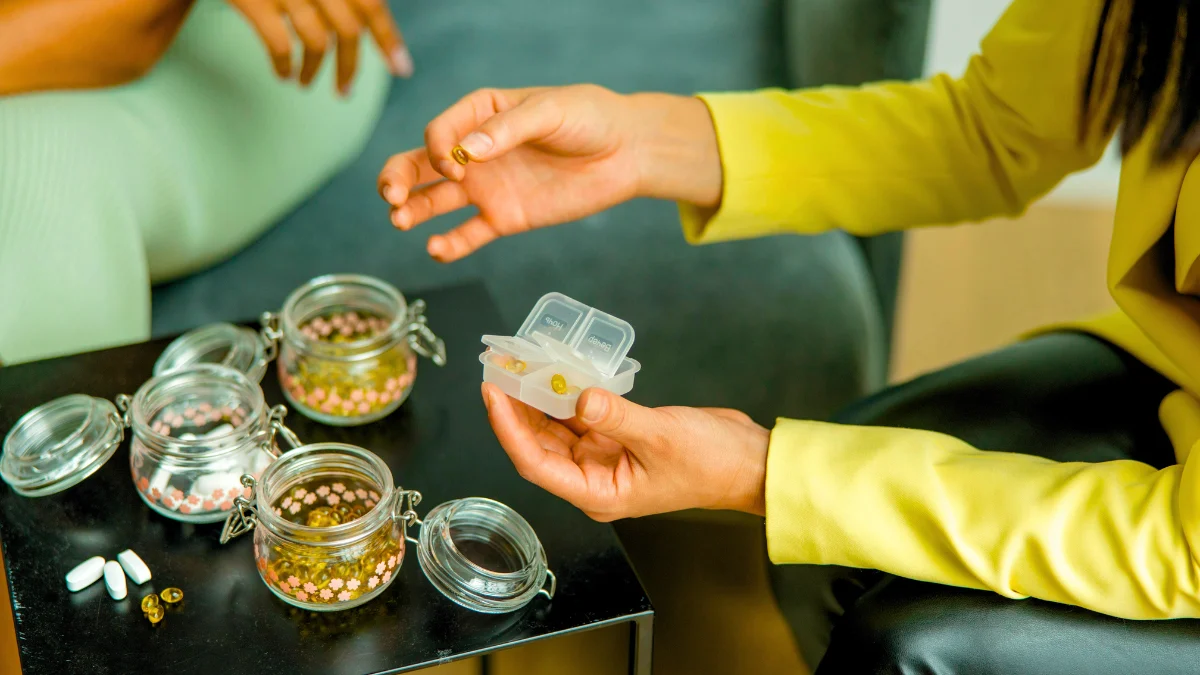
You cannot build a brick house without delivering bricks and cement to the construction site. Similarly, your body cannot manufacture native collagen unless you provide the exact dietary precursors and vitamins required for assembly.
Here are the essential nutrients your body uses to produce collagen internally:
1. Amino Acids: The “Bricks”
Collagen is a complex protein made up of long chains of amino acids. The three primary amino acids needed are glycine, proline, and lysine.
- Where to find them: Quality protein sources like bone broth, wild-caught fish, organic poultry, eggs, pumpkin seeds, lentils, and spirulina.
2. Vitamin C: The “Cement”
Vitamin C (L-Ascorbic Acid) is an essential cofactor for two critical enzymes (prolyl hydroxylase and lysyl hydroxylase). Without Vitamin C, the amino acid chains cannot bind together into strong collagen fibers. Think of Vitamin C as the cement that locks the bricks into place.
- Where to find it: Bell peppers, citrus fruits, strawberries, kiwi, broccoli, and dark leafy greens.
3. Zinc and Copper: The “Construction Tools”
These essential trace minerals activate enzymes responsible for tissue repair, cell division, and cross-linking collagen fibers to give them flexibility and strength.
- Where to find them: Shellfish, sesame seeds, cashew nuts, chickpeas, and dark chocolate.
4. Dietary Phytoestrogens: Nature’s Gentle Signalers
Phytoestrogens are naturally occurring plant compounds that structurally resemble human estrogen. They bind weakly to cellular estrogen receptors, offering gentle support for cell hydration and tissue vitality.
- Where to find them: Flaxes, fermented soy (tofu, tempeh, miso), sesame seeds, and red clover tea.
Part 4: Demystifying Collagen Biostimulators What Are They?
In aesthetic dermatology, you may have heard about collagen biostimulators. To understand how they differ from traditional cosmetic treatments, let’s compare them side by side:
Traditional Dermal Fillers vs. Collagen Biostimulators
Feature | Traditional Dermal Fillers | Collagen Biostimulators |
|---|---|---|
Primary Material | Hyaluronic Acid Gel | Biocompatible Polymers (PLLA, CaHA, PDO) |
How It Works | Fills a physical space like a liquid cushion | Wakes up your own fibroblast “factories” to produce natural collagen |
Immediate Result | Instant volume where injected | Subtle initial result; collagen grows over 3–6 months |
Duration | 6 to 12 months (dissolves over time) | 18 to 24+ months (uses your body’s own newly built tissue) |
The 3 Main Types of Biostimulators Explained Simply
- Poly-L-Lactic Acid (PLLA): Made of biodegradable microparticles that naturally break down into lactic acid (a substance your body produces during exercise). As the particles slowly dissolve, they stimulate surrounding cells to deposit fresh, long-lasting Type I collagen.
- Calcium Hydroxylapatite (CaHA): Microscopic mineral spheres suspended in a smooth gel. It provides subtle immediate support while encouraging your tissue to build a dense network of new collagen fibers over 12 to 18 months.
- PDO Threads (Polydioxanone): Ultra-fine, dissolvable medical threads placed beneath the skin. As the body safely absorbs the thread over several months, it leaves behind a path of firm, newly formed collagen fibers along the thread line.
A Pharmacist’s Crucial Note: Biostimulators are like alarm clocks for sleepy fibroblast cells they give the signal to wake up and work. However, if your body lacks amino acids, Vitamin C, and hydration, those cells won’t have the materials they need to build new tissue. Internal nutrition and clinical treatments must work together.
Frequently Asked Questions (FAQ)
Does taking oral collagen peptide supplements actually work?
Yes, provided you choose hydrolyzed collagen peptides. Hydrolyzed collagen is broken down into tiny bioavailable molecules that pass through the digestive tract into the bloodstream. Once absorbed, they provide essential amino acids and act as signaling fragments that trigger your skin cells to synthesize new collagen over 8 to 12 weeks of daily use.
Why do my regular anti-aging creams seem to stop working after age 45?
Topical moisturizers primarily work on the outermost layer of your skin (the epidermis) to prevent surface water loss. Menopausal skin aging, however, is driven by structural changes deep within the lower skin layer (the dermis) due to hormonal shifts. Surface hydration is helpful, but it cannot replace lost structural fibers beneath the surface.
Are collagen biostimulators safe for women in menopause?
Yes. Biostimulators are made from biocompatible materials that have been safely used in medical implants and dissolvable surgical sutures for decades. They gradually break down into harmless natural compounds (like water and carbon dioxide) while leaving your newly formed collagen in place.
Can eating a healthy diet fully reverse menopausal collagen loss?
While a nutrient-dense diet cannot stop the natural hormonal decline of menopause, it provides the vital raw materials needed to minimize collagen breakdown and support tissue repair. A diet rich in protein, Vitamin C, zinc, and healthy fats ensures your skin and muscles remain as resilient and healthy as possible.
What is the difference between skin dryness and loss of elasticity?
Skin dryness occurs when your skin’s protective lipid barrier degrades and hyaluronic acid levels drop, preventing the surface from retaining moisture. Loss of elasticity happens when collagen and elastin fibers in the deeper dermal layer break down, causing the tissue to lose its firmness and bounce.