
Generic selectors
Exact matches only
Search in title
Search in content
Post Type Selectors
Generic selectors
Exact matches only
Search in title
Search in content
Post Type Selectors

What is the Power of Collagen and Hyaluronic Acid?

beauty hormone


Menopause is a profound biological journey, a natural transition that marks a new chapter in a woman’s life. While it brings wisdom and a different kind of freedom, it also ushers in significant hormonal shifts that can dramatically alter the skin’s health, appearance, and texture.

The decline in estrogen, often called the “Beauty Hormone,” accelerates the aging process, leading to increased dryness, loss of firmness, and more pronounced wrinkles. But this doesn’t mean you have to surrender your glow. In fact, with the right knowledge and a targeted skincare strategy, you can navigate this phase with confidence and maintain a vibrant, healthy complexion.

Daily Skin Care Routine
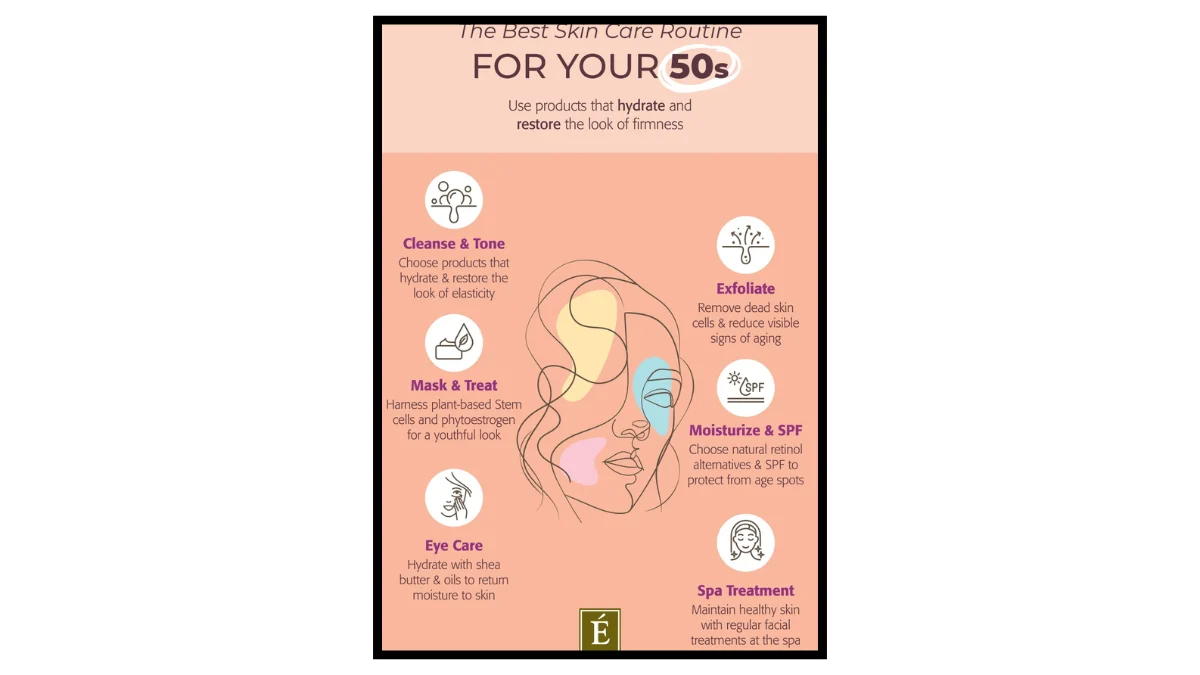
skincare challenges of menopause

This guide will help you understand and manage the unique challenges your skin faces during menopause.

We’ll delve into the science behind skin changes, discover the crucial role of collagen and hyaluronic acid, and reveal a holistic approach to nourishing your skin from the inside out.

Get ready to unlock the secrets to radiant, resilient skin and embrace the beauty of this transformative phase.

Understanding the “Menopause Effect” on Your Skin

estrogen and skin


The hormonal fluctuations during perimenopause and menopause are the primary drivers of the changes you see in the mirror. Estrogen plays a pivotal role in maintaining skin health, and its decline impacts several key functions, creating a domino effect that alters the skin’s very structure and behavior. For a deeper dive into these transformations, explore our article on .

The Great Collagen Decline: Losing Your Skin’s Scaffolding

Collagen is the most abundant protein in your body, providing the essential framework or “scaffolding” that keeps your skin firm, plump, and resilient.
Estrogen is crucial for stimulating the fibroblasts, the cells responsible for producing collagen.
As estrogen levels plummet, so does collagen synthesis. Research indicates that women can lose up to 30% of their skin’s collagen within the first five years of menopause.
 
This rapid depletion is the main reason for:
 
Loss of Firmness and Elasticity: The skin’s structural integrity weakens, leading to sagging, particularly around the jawline, cheeks, and neck.
 
Increased Wrinkles: With less collagen to support the epidermis, fine lines deepen into more prominent wrinkles and folds. For more detailed strategies on managing these changes, read our dedicated article on
Thinner, More Fragile Skin: The dermal layer thins out, making the skin more susceptible to damage, bruising, and slower wound healing.

The Dehydration Dilemma: Why Your Skin Feels Constantly Thirsty

If you’ve noticed your skin becoming increasingly dry, tight, and flaky, you’re not imagining it.
Estrogen also stimulates the production of hyaluronic acid (HA), a remarkable molecule that can hold up to 1,000 times its weight in water.
Hyaluronic acid is your skin’s natural humectant, drawing moisture from the environment and locking it into your skin cells to maintain hydration, volume, and a dewy look.
 
As estrogen and, consequently, hyaluronic acid levels decrease, the skin’s ability to retain moisture is severely compromised. This leads to chronic dehydration, which not only causes discomfort but also makes fine lines and wrinkles appear more pronounced. Furthermore, the skin’s protective barrier function can become impaired, leaving it more vulnerable to environmental irritants and sensitivity.

Your Powerhouse Duo for Menopausal Skin: Collagen & Hyaluronic Acid
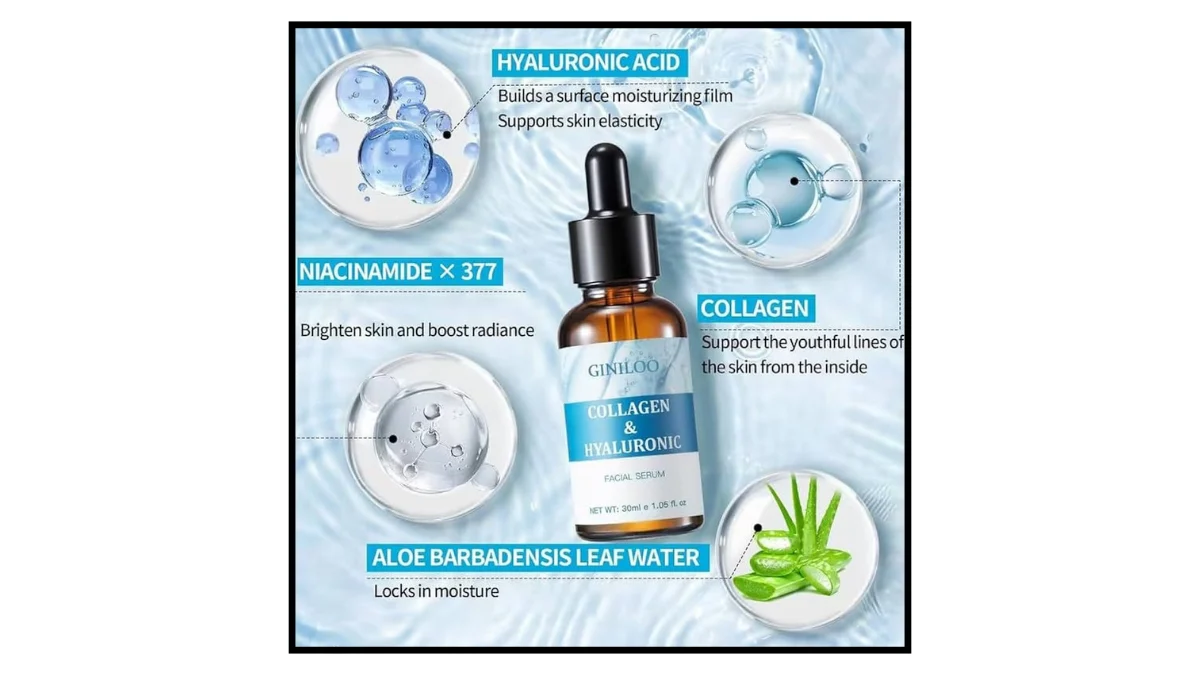
Skin

While you can’t stop the hormonal changes, you can strategically counteract their effects on your skin.Collagen and hyaluronic acid are the two most critical ingredients to focus on in your anti-aging arsenal during menopause. They work synergistically to address the core issues of structural decline and dehydration.

Rebuilding with Collagen: From Supplements to Serums

Replenishing your collagen stores is paramount. The modern approach to this involves a two-pronged attack: from the inside and the outside.
Oral Collagen Supplements: This is where the science gets exciting. Ingesting hydrolyzed collagen peptides has been shown to be highly effective.
 
These small, easily absorbed protein fragments travel through your bloodstream and signal to your fibroblasts to ramp up collagen production. A landmark 2021 study confirmed that daily oral collagen supplementation significantly improves skin hydration, elasticity, and density, leading to a visible reduction in wrinkles. When choosing a supplement, look for types I and III collagen peptides, as these are the most prevalent in the skin.
 
Topical Collagen and Peptides: While collagen molecules themselves are too large to penetrate the skin’s surface, skincare formulations have evolved. Modern serums and creams now use collagen-stimulating peptides. These are short chains of amino acids that act as messengers, tricking the skin into thinking its collagen has broken down and signaling it to produce more. 

Rehydrating with Hyaluronic Acid: The Ultimate Moisture Magnet

Restoring your skin’s hydration levels is just as crucial as rebuilding its structure. Hyaluronic acid is your go-to ingredient for this.
 
Multi-Molecular Hyaluronic Acid Serums: Not all HA serums are created equal. For maximum benefit, opt for a formula that contains multiple molecular weights of hyaluronic acid. Larger molecules sit on the surface to provide immediate hydration and a smoothing effect, while smaller molecules can penetrate deeper into the epidermis to deliver long-lasting moisture and plump the skin from within. Apply your HA serum to damp skin to give it the moisture it needs to work its magic.
 
Beyond Serums: Look for hyaluronic acid in your cleansers, moisturizers, and even face masks. This ensures you are layering hydration at every step of your routine. Ingredients like:  Cassia Angustifolia Seed Polysaccharide, a botanical alternative, can also provide impressive, long-lasting hydration.

Building Your Ultimate Menopause Skincare Routine: A Step-by-Step Guide

Menopause Skincare


A successful skincare routine during menopause is about consistency and using the right combination of active ingredients to support your skin’s changing needs. It’s about working with your skin, not against it.

The Core Four: Your Non-Negotiable Daily Steps

1.Gentle, Hydrating Cleanse: Ditch harsh, stripping cleansers. Opt for a creamy, milky, or oil-based cleanser that removes impurities without disrupting your skin’s delicate moisture barrier. Cleansing both morning and night is essential.
 
2.Targeted Treatment Serums: This is where your powerhouse actives come in. In the morning, a Vitamin C serum is a must. It’s a potent antioxidant that protects against environmental damage, brightens the complexion, and provides additional collagen-boosting benefits. At night, after cleansing, apply your collagen-stimulating peptide serum and/or your multi-molecular hyaluronic acid serum.
 
3.Rich, Nourishing Moisturizer: Your moisturizer’s job is to lock in the benefits of your serums and fortify your skin barrier. Look for creams rich in ceramides, shea butter, and niacinamide. Niacinamide (Vitamin B3) is another superstar for menopausal skin, as it helps improve elasticity, reduce redness, and enhance barrier function.
 
4.Broad-Spectrum Sunscreen (SPF 30+): This is the single most important anti-aging step. Sun exposure accelerates collagen breakdown and exacerbates all signs of aging. Make applying a broad-spectrum sunscreen the final step of your morning routine, every single day, without exception.

Weekly Boosters and Advanced Treatments

Gentle Exfoliation: As cell turnover slows, dead skin cells can accumulate, leading to a dull appearance. Incorporate a gentle exfoliant 1-2 times per week. Lactic acid or polyhydroxy acids (PHAs) are excellent choices for mature skin as they exfoliate without causing irritation.
 
Retinoids: If your skin can tolerate it, introducing a retinoid (like retinol or retinaldehyde) into your nighttime routine 2-3 times a week can be transformative. Retinoids are the gold standard for stimulating cell turnover and collagen production, effectively treating wrinkles and improving skin texture.
 
Phytoestrogens: These plant-derived compounds can weakly bind to the estrogen receptors in the skin, helping to mitigate some of the effects of estrogen loss. Look for ingredients like soy isoflavones, genistein, or resveratrol in your skincare products.
By embracing this comprehensive, science-backed approach, you can not only preserve your skin’s health but also enhance its radiance and vitality.
 
Menopause is a journey of transformation, and with the right care, your skin can emerge more beautiful and resilient than ever. Discover more ways to feel .

Conclusion

Reveal radiant, youthful skin during menopause with our guide. Discover how to combat dryness and wrinkles by harnessing the power of collagen and hyaluronic acid. Learn the best ingredients, routines, and holistic tips for luminous skin after 45.

Scientific Studies:

1.Lephart, E. D., & Naftolin, F. (2021). Menopause and the Skin: Old Favorites and New Innovations. Dermatology and Therapy.
 
2.de Miranda, R. B., Weimer, P., & Rossi, R. C. (2021). Effects of hydrolyzed collagen supplementation on skin aging: a systematic review and meta-analysis. International Journal of Dermatology.

Written and reviewed by: Dr. Vilma Mendonça
Images – Pexels and AI

Vilma Mendonca

Writer & Blogger

Leave a Reply

Your email address will not be published. Required fields are marked *

Related Posts

Blooming in Maturity Menopause with Natural Therapies and Self-Care.

Contact

Copyright @2025 Mariah Chic - All rights reserved