Unveiling the Connection Between Inflammation and Menopause Belly
Menopause is a phase of profound transformation in a woman’s body, and one of the most frustrating changes for many is the appearance of stubborn fat around the abdomen, often referred to as the “menopause belly.” But what is really behind this phenomenon? The answer often lies in a silent and insidious process: chronic low-grade inflammation.
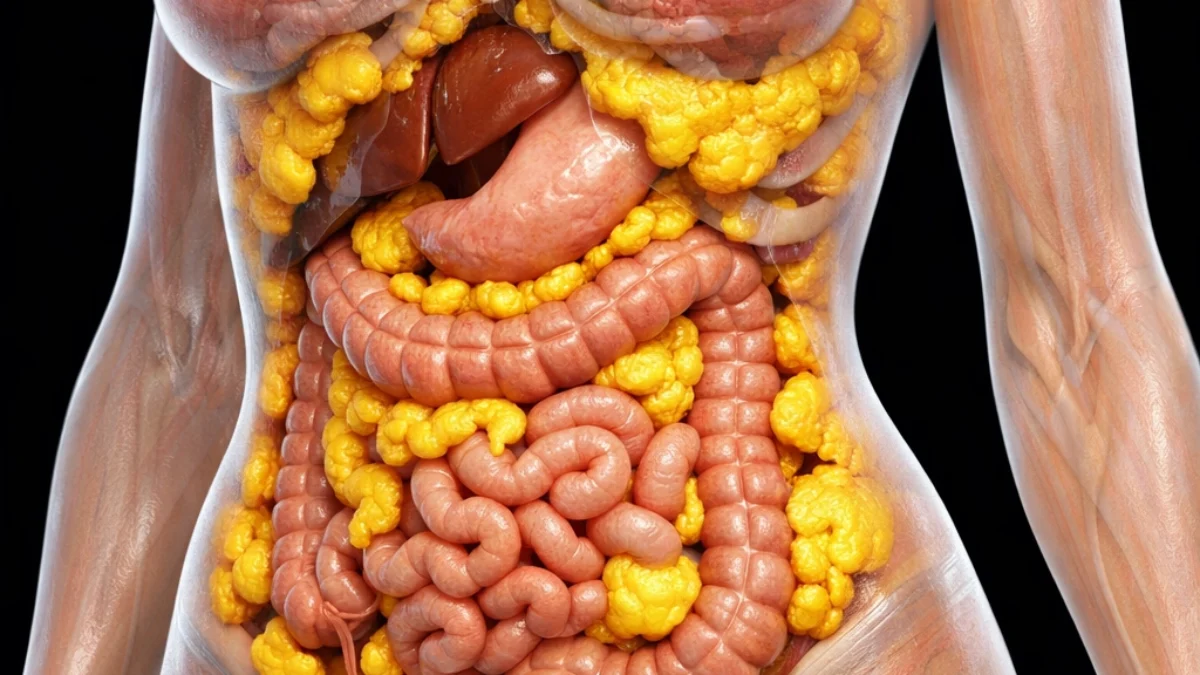
With the decline in estrogen levels, a woman’s body undergoes several adaptations. One of them is a shift in how fat is stored. Previously, fat tended to accumulate in the hips and thighs; now, it migrates to the visceral region, surrounding the abdominal organs. This visceral fat is not just a cosmetic issue it is metabolically active and releases inflammatory substances that trigger a vicious cycle.
These inflammatory compounds increase insulin resistance, a crucial hormone that helps the body use glucose for energy. When cells become resistant to insulin, the pancreas produces even more, leading to excess glucose in the bloodstream which, as you might guess, is stored as more fat, especially in the belly. It’s a cycle that seems endless, but the good news is that you have the power to break it through your diet.
To understand the science behind this change in the body in more depth, be sure to read our full article: Menopause Belly – The Science Nobody Explained to You.
The Power of Anti-Inflammatory Nutrition During Menopause

A diet rich in anti-inflammatory foods is your greatest ally in combating menopause belly. It not only helps reduce inflammation and insulin resistance but also promotes a healthier metabolism, improves gut health, and enhances overall well-being.
Additionally, anti-inflammatory teas such as ginger, hibiscus, horsetail, dandelion, and green tea are excellent allies in reducing abdominal fat.
Let’s explore the superfoods that can transform your health:
1. Omega-3: The Inflammation Peacemaker
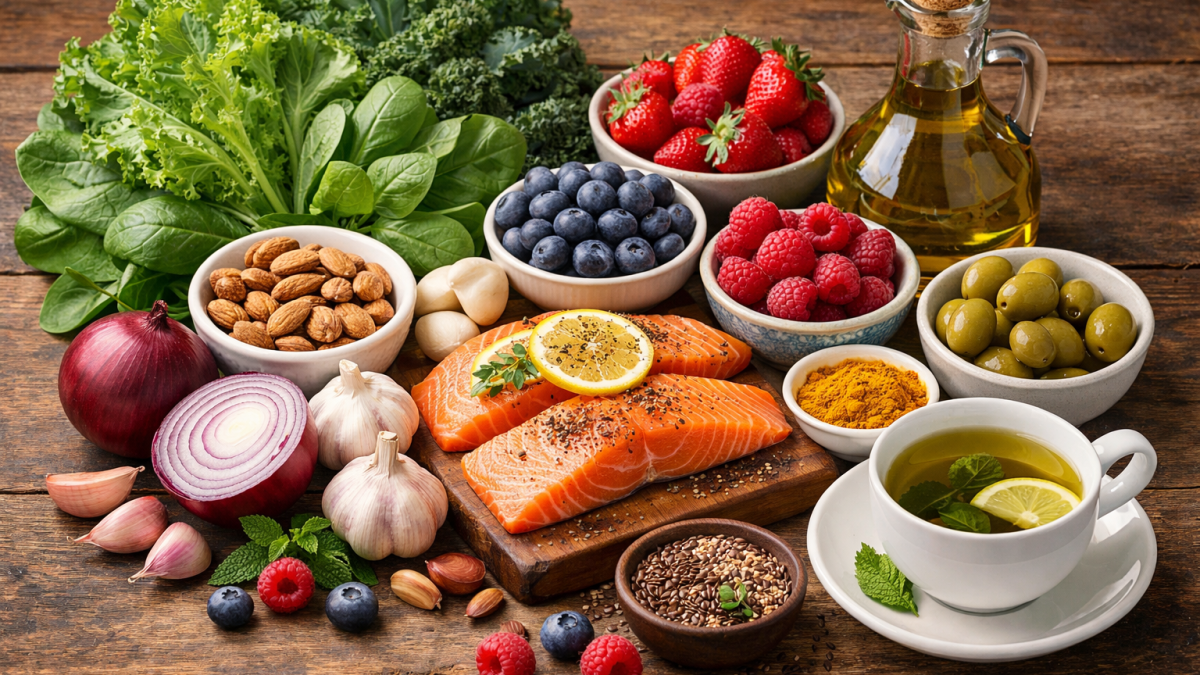
Omega-3 fatty acids are true peacekeepers in the body. Found in fatty fish like salmon, sardines, mackerel, and tuna, as well as plant sources like flaxseeds, chia seeds, and walnuts, they help regulate the body’s inflammatory response.
Studies show that omega-3 can reduce inflammatory markers and improve insulin sensitivity in postmenopausal women. This means better blood sugar control and less fat storage.
2. Extra Virgin Olive Oil: Liquid Gold for Health
A cornerstone of the Mediterranean diet, extra virgin olive oil is rich in monounsaturated fats and polyphenols, offering powerful anti-inflammatory and antioxidant benefits.
Regular consumption may help combat metabolic syndrome, support heart health, and improve satiety helping with weight management.
3. Turmeric: The Golden Anti-Inflammatory Spice
Turmeric contains curcumin, one of the most studied natural anti-inflammatory compounds. It works at the cellular level to block inflammatory pathways.
For better absorption, always combine turmeric with black pepper and a source of healthy fat.
4. Lean Proteins: Boosting Metabolism and Preserving Muscle
Adequate protein intake is essential during menopause. Lean proteins help maintain muscle mass, which naturally declines with age and hormonal changes.
More muscle means a higher resting metabolism, improved fat burning, and better appetite control.
5. Soluble Fiber: The Secret to a Healthy Gut and Flat Belly
Foods rich in soluble fiber such as oats, apples, legumes, and leafy greens help regulate blood sugar, improve gut health, and increase satiety.
They also nourish beneficial gut bacteria, reducing inflammation and bloating.
6. Berries: Small but Powerful Antioxidant Bombs
Strawberries, blueberries, raspberries, and blackberries are rich in antioxidants like anthocyanins, which fight oxidative stress and inflammation.
They are also low in sugar and high in fiber, making them ideal for healthy snacking.
7. Dark Leafy Greens: The Foundation of Health
Spinach, kale, arugula, and broccoli are packed with vitamins, minerals, and antioxidants. They help detoxify the body and reduce inflammation.
Include them daily for optimal results.
Dietary Strategies for Hormonal Balance
The Mediterranean Diet: A Lifestyle, Not Just a Diet
This eating pattern emphasizes whole, nutrient-dense foods and healthy fats, particularly olive oil. It supports heart health, reduces inflammation, and helps control abdominal fat.
Reducing Refined Carbohydrates
Refined carbs like white bread, sugar, and processed foods spike blood sugar and insulin levels, promoting fat storage.
Switching to complex carbohydrates helps stabilize energy and supports fat loss.
What to Avoid
- Added sugars
- Trans fats and hydrogenated oils
- Excess alcohol
- Ultra-processed foods
Beyond Nutrition: A Holistic Approach
Managing menopause belly requires more than diet. Stress management, regular exercise (especially strength training), and quality sleep are equally essential.
Conclusion
Menopausal belly fat doesn’t have to be a life sentence. By adopting a dietary approach focused on anti-inflammatory foods, rich in omega-3s, olive oil, turmeric, lean proteins, fiber, and berries, you’ll be taking powerful steps to reverse inflammation, improve your metabolism, and reduce abdominal fat. Remember that every little change counts and consistency is key. With information and the right choices, you can not only reduce your menopausal belly fat but also enjoy vibrant and fulfilling health in this new phase of life. Start transforming your diet today and feel the difference!
Scientific References:
Written and reviewed by: Dr. Vilma Mendonça – Pharmacist
AI Images