
Generic selectors
Exact matches only
Search in title
Search in content
Post Type Selectors
Generic selectors
Exact matches only
Search in title
Search in content
Post Type Selectors

Frozen Shoulder During Menopause: What It Is, Why It Happens, and How to Treat It Naturally

woman shoulder pain

You're Not Alone

Imagine waking up one day and discovering you can’t lift your arm to brush your hair. Or that putting on a blouse has become so painful you need help. This is what many menopausal women experience, and most have no idea what’s happening.
This condition is called frozen shoulder (or in medical terms, adhesive capsulitis). And here’s the most important thing: you’re not going crazy, it’s not laziness, and it’s not just age. It’s menopause.
 
Over the past 20 years as a pharmacist, I’ve seen hundreds of women arrive desperate, having visited multiple doctors, spending money on expensive tests, and no one could explain why their shoulder was like this. Many had already consulted rheumatologists, orthopedists, and no one made the connection to menopause.
In this article, I’ll explain exactly what frozen shoulder is, why it happens during menopause, and most importantly how you can treat it naturally at home using techniques that work.

What Is Frozen Shoulder?

shoulder to move
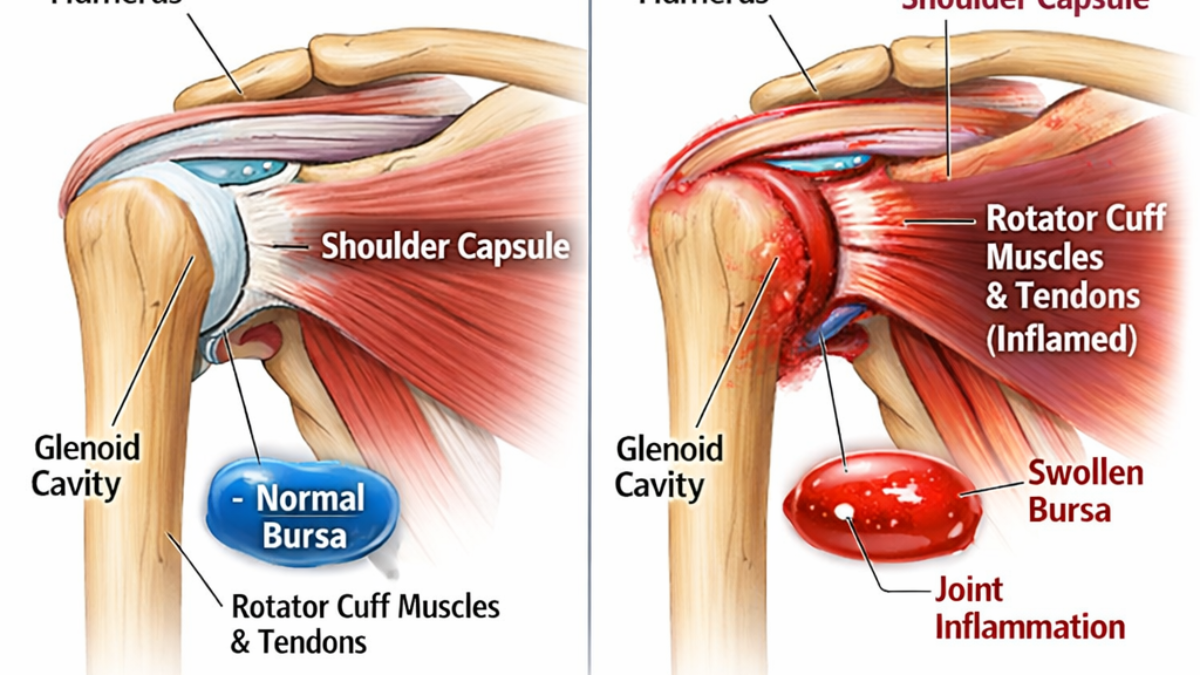
Think of your shoulder as a joint with a “bag” around it. This bag is made of tissue that allows your shoulder to move smoothly in all directions.
When you’re healthy, this bag has plenty of lubrication  like oil in a machine allowing free movement without pain.
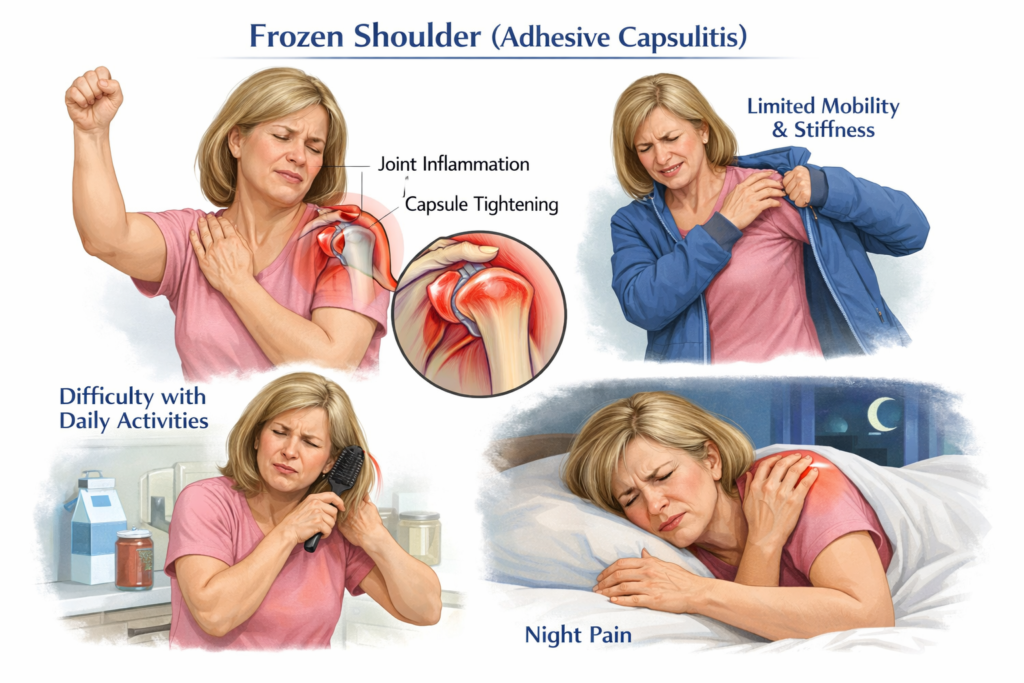
Frozen shoulder happens when this bag becomes inflamed and shrinks. The tissue becomes stiff, as if it were wrinkled. Result? Your shoulder can’t move normally. That’s it.
 
The condition has three phases:
 
Phase 1: Freezing (2-3 months) – You start to feel pain when moving your shoulder. The pain gradually worsens. You may notice that certain positions hurt more than others.
 
Phase 2: Frozen (4-12 months) – The pain may improve slightly, but stiffness gets much worse. You lose range of motion. Simple activities like brushing hair, putting on a blouse, or driving become difficult or impossible.
 
Phase 3: Thawing (6-12 months) – Gradually, movement returns. Pain decreases. You regain range of motion.
Total time? On average, 6 to 12 months. But with the right treatment, you can speed up this process.

Why Does Menopause Cause Frozen Shoulder?
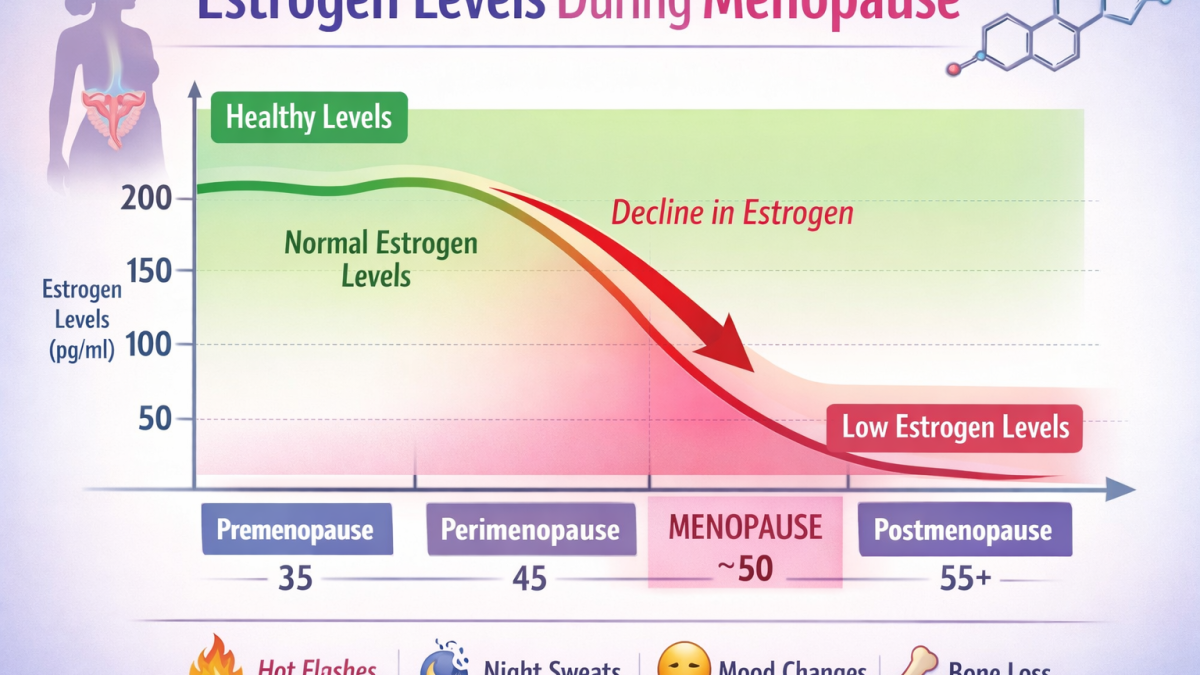
estrogen and menopause
 
Here’s where the science gets interesting. And it doesn’t need to be complicated  I’ll explain it in a way that makes sense.
Throughout your reproductive years, your body produces estrogen. This hormone doesn’t just control your menstrual cycle. It does much more. It helps keep your bones strong, reduces inflammation throughout your body, and keeps your connective tissues (like the bag around your shoulder) healthy and flexible.
 
When you enter menopause, your estrogen levels drop dramatically. And that’s when problems begin.
Without enough estrogen, three bad things happen to your shoulder:
 
1. Lubrication Disappears – Just like your skin gets dry during menopause (you’ve probably noticed this), the bag around your shoulder also dries out. Without lubrication, movement becomes difficult and painful.
2. Inflammation Increases – Estrogen naturally reduces inflammation. Without it, your body becomes more inflamed. This inflammation affects the shoulder bag, leaving it swollen and stiff.
3. Connective Tissue Weakens – Estrogen helps keep collagen (the protein that keeps your tissues strong and flexible) in good condition. Without estrogen, collagen weakens, and connective tissue becomes less flexible.
Result? Frozen shoulder.
 
And here’s the most important fact: women get much more frozen shoulder than men. And most cases happen between ages 40 and 60 — exactly the age of menopause.
Coincidence? No. It’s science.

Signs You Might Have Frozen Shoulder

shoulder pain
You might be wondering: “How do I know if it’s frozen shoulder and not just normal shoulder pain?”
 
Here are the typical signs:
Pain that gradually worsens – It starts mild and gets worse over weeks or months. It’s not sudden pain (which is usually injury).
 
Morning stiffness – You wake up with your shoulder very stiff. It can take hours to improve.
 
Loss of movement – You can’t lift your arm above your head. You can’t put your hand behind your back. You can’t put on a blouse easily.
 
Pain when trying to stretch – When you try to force movement, it hurts. But the movement doesn’t return  you just feel pain.
 
Pain at night – Many women wake up at night with shoulder pain.
 
Pain that doesn’t improve with rest – Unlike a normal injury, rest doesn’t help much. In fact, rest can make it worse because your shoulder becomes stiffer.
If you have several of these signs, especially if you’re going through menopause, it’s very likely you have frozen shoulder.

Natural Treatments That Work

Now comes the good part. You don’t need surgery. You don’t need expensive injections. There are natural treatments that work very well.
Based on 20 years of experience and scientific research, here are the treatments that really work:

Therapeutic Massage: Your Best Friend

massage therapy
 
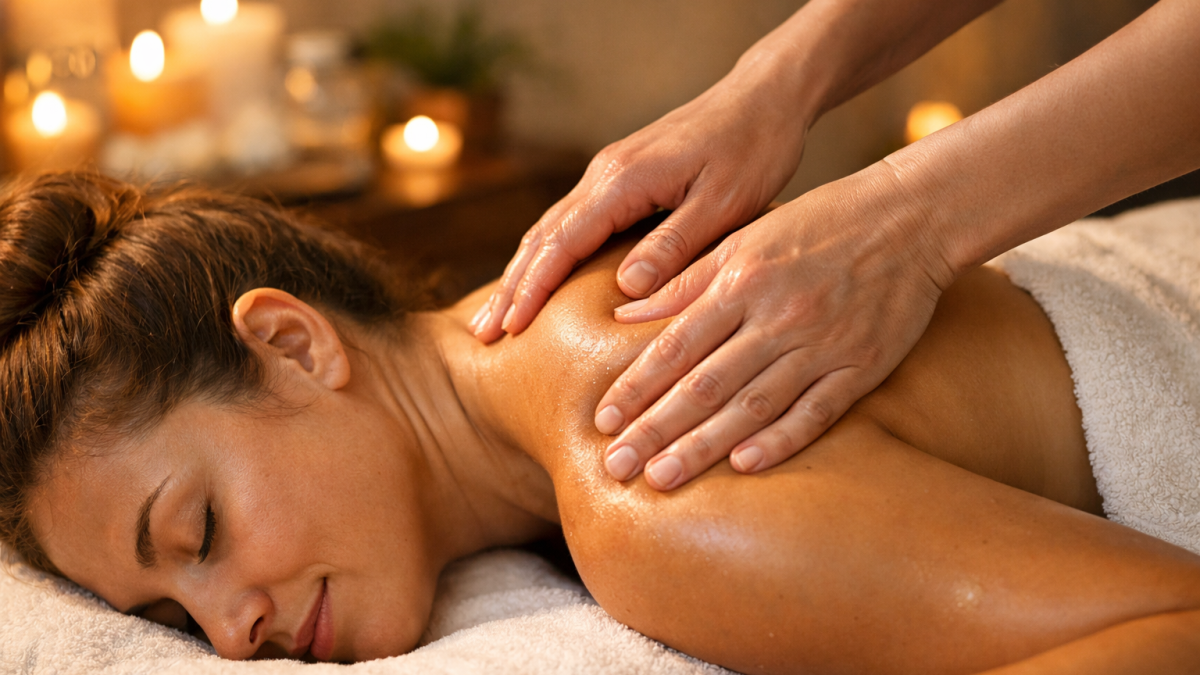
Massage is one of the most powerful tools for frozen shoulder. Why? Because it reduces inflammation, relaxes tense muscles, and increases circulation.
 
How to do it:
You can do this at home. You don’t need a therapist (although it’s great if you can have one 1-2 times a week).
Take your affected arm and place your hand on the other side of your body. Now, with the fingers of your healthy hand, start massaging your affected shoulder. Look for painful points these are called “trigger points.” When you find one, press gently and make circular motions.
 
Frequency: 2-3 times a day, 5-10 minutes each time.
Important tip: Don’t massage too hard. It should be firm but comfortable. If it hurts a lot, you’re pressing too hard.

Warm Oils: Immediate Relief

essential oils arnica
 
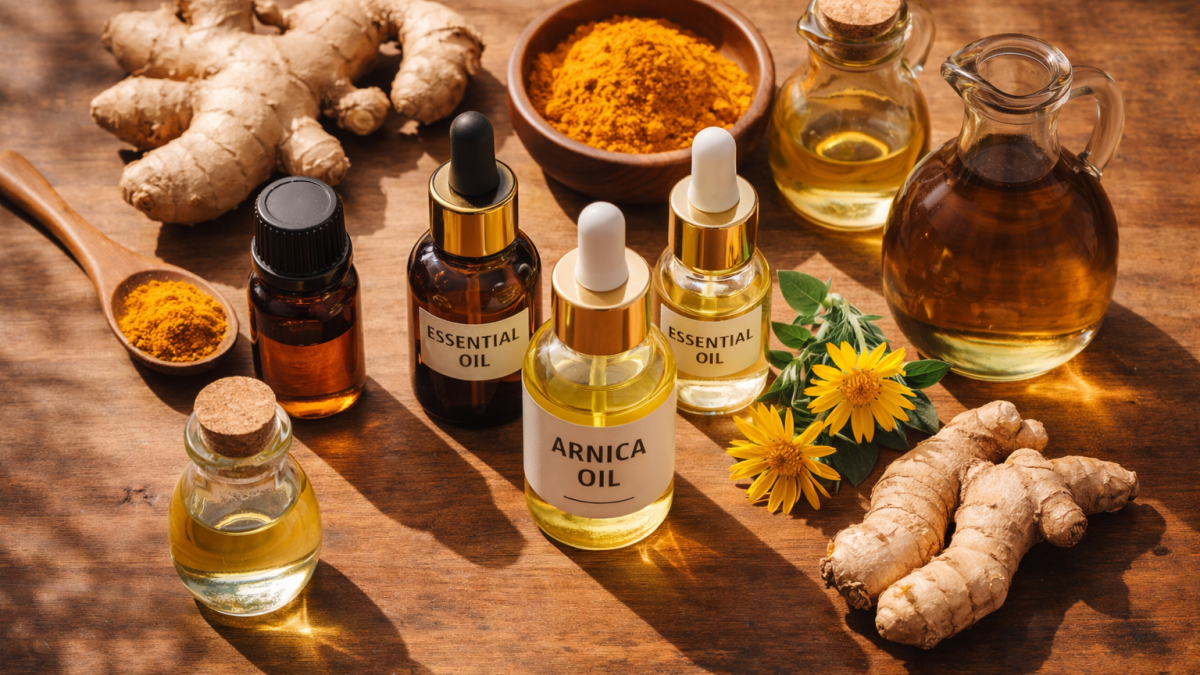
Warm oils are magical for frozen shoulder. They reduce inflammation, warm the tissue, and increase circulation.
 
Arnica Oil: Arnica is a plant with natural anti-inflammatory properties. You can buy arnica oil at pharmacies or online.
Warm a little oil (not too hot test on your hand first to avoid burning). Massage it on your affected shoulder, making gentle circular motions.
Frequency: 2-3 times a day.
Essential Oils:
You can also use essential oils. The best for frozen shoulder are:
Lavender: Mix 5-10 drops of lavender essential oil with 2 tablespoons of coconut oil. Massage on your shoulder 2-3 times a day.
Peppermint: Increases circulation and reduces pain. Use the same way as lavender.
Lemongrass: Reduces inflammation. Apply 1-2 drops on the sole of your foot (side of affected shoulder).
Tip: Always mix essential oils with a carrier oil (coconut, almond, or jojoba). Never apply pure essential oil to your skin.

Specific Exercises: The Secret to Recovery
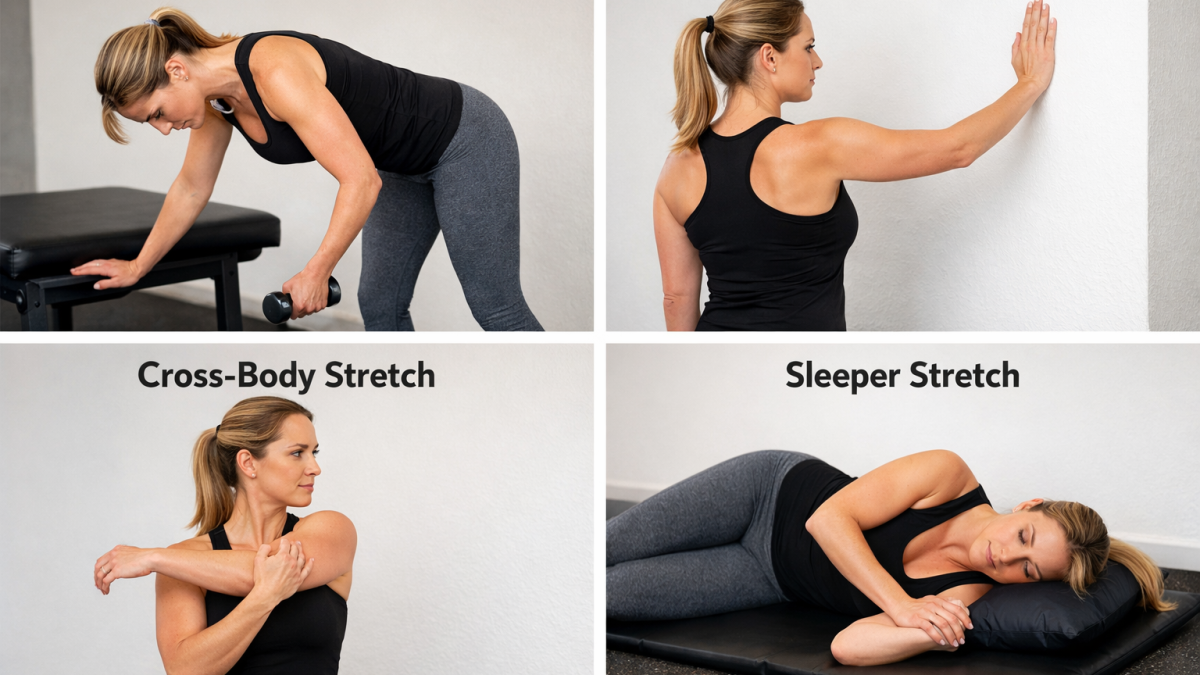
exercises demonstration
 
Here’s a truth many don’t want to hear: exercise is essential. But not just any exercise  specific exercises for frozen shoulder.
The reason is simple: if you don’t move your shoulder, it gets stiffer and stiffer. Exercise maintains movement, reduces inflammation, and speeds up recovery.
 
Exercise 1: Pendulum (The Easiest)
Lean forward over a table or chair. Let your affected arm hang. Now, make slow circular motions with your arm  like a pendulum. Start small (small circles) and gradually increase.
Duration: 1-2 minutes, 3 times a day.
 
Exercise 2: Wall Stretch
Stand facing a wall. Place your affected hand on the wall and start “walking” your fingers up slowly. Go only as far as you can without pain.
Duration: 30 seconds, 3 times a day.
 
Exercise 3: Cross-Body Stretch
Place the hand of your healthy arm on the elbow of your affected arm. Gently pull your affected arm toward your body. You should feel a stretch in your shoulder.
Duration: 30 seconds, 3 times a day.
 
Exercise 4: Sleeper Stretch
Lie on your side (affected side down). Place your affected hand behind your head. Slowly, pull your elbow toward the floor, stretching your shoulder.
Duration: 30 seconds, 3 times a day.
Golden Rule: Always warm up before exercising. Apply heat for 15-20 minutes before. And never force movement go only as far as you can without pain.

Phytotherapeutics The Power of Plants

phytotherapy supplements
 
As a pharmacist, I can say with confidence: nature has powerful tools to reduce inflammation. Here are the best:
Turmeric: Turmeric is a yellow spice used in curry. Its active component, curcumin, is one of the most powerful natural anti-inflammatories we know.
Dosage: 500-1000mg of curcumin per day (or 1-2 teaspoons of turmeric powder per day).
Important tip: Turmeric is absorbed better with black pepper and fat. So, add a little black pepper and coconut oil to your turmeric tea.
Time to work: 3-4 weeks to notice a difference.
 
Ginger: Ginger is another powerful natural anti-inflammatory. You can use it fresh or as a supplement.
Dosage: 1-2 grams per day (fresh or powder).
Form: Tea (peel a piece of fresh ginger, boil in water for 10 minutes), or add to food.
 
Powerful Combination: Ginger + Turmeric = superior anti-inflammatory effect. Studies show that using both together is more effective than using one alone.
 
Boswellia (Frankincense): Boswellia is a tree resin used for centuries in Ayurvedic medicine. It reduces chronic inflammation.
Dosage: 300-500mg per day.
Time to work: 4-8 weeks.
 
Collagen: Collagen is the protein that keeps your connective tissues strong. During menopause, you lose collagen. Supplementing can help.
Dosage: 10 grams per day.
Form: Powder that you mix in water, juice, or coffee.

Anti-Inflammatory Diet Eat Well, Feel Well
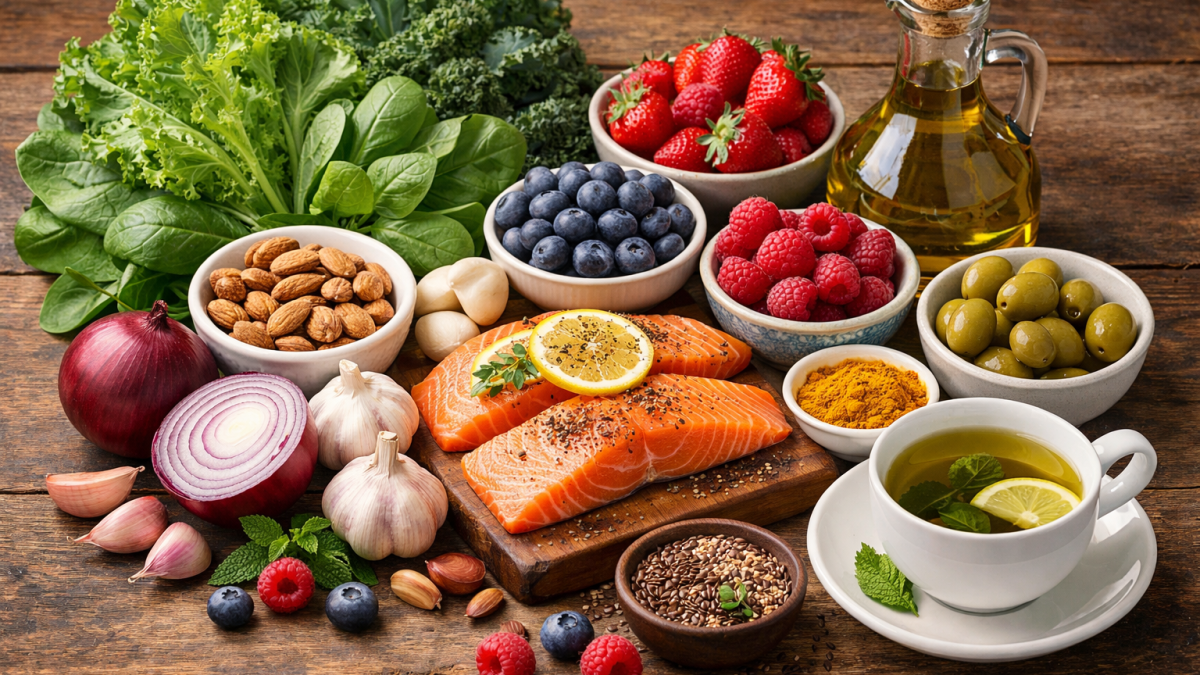
healthy foods
 
What you eat affects inflammation in your body. So, eating well is part of the treatment.
Foods to Include:
Green leafy vegetables (spinach, kale, lettuce), red fruits (strawberry, blueberry, raspberry), fatty fish (salmon, sardine, tuna) rich in omega-3, nuts and seeds, olive oil, garlic and onion, green tea.
 
Foods to Avoid:
Refined sugar, processed foods, trans fats (fried foods, industrialized foods), excessive alcohol, soda.
Simple Tip: If it was made in a factory and has a long list of ingredients you can’t pronounce, it’s probably inflammatory. Eat real food.

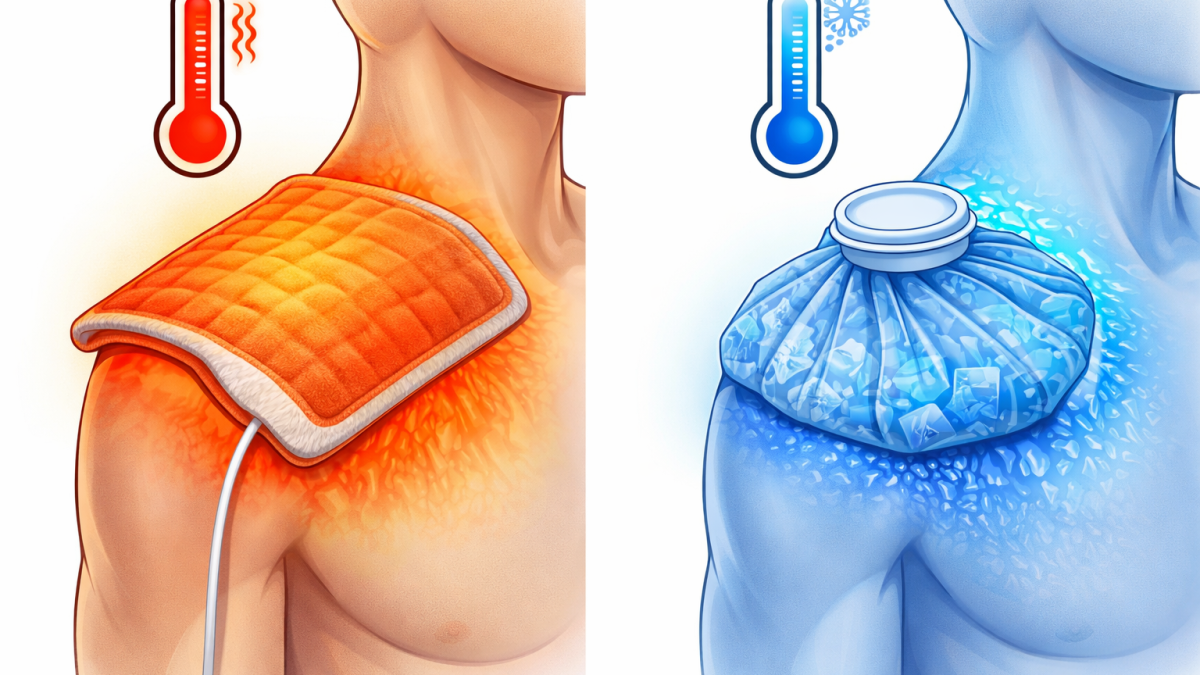
Heat and Cold: Simple But Effective

SHOULDER TRATAMENT
 
You probably already know this, but I’ll reinforce it because it works.
Heat: Heat reduces stiffness and pain. Use a heating pad or hot water bottle.
When to use: In the morning (for morning stiffness), before exercising, or when your shoulder is very stiff.
Duration: 15-20 minutes.
Frequency: 2-3 times a day.
 
Cold: Cold reduces inflammation and swelling. Use an ice pack or bag of frozen vegetables.
When to use: After exercising, if your shoulder is swollen.
Duration: 15-20 minutes.
Frequency: As needed.
Tip: You can alternate 10 minutes of heat, then 10 minutes of cold. This is very effective.

Complete Protocol: How to Do It All Together

Now that you know each treatment, here’s how to combine them for maximum effectiveness:
 
Morning:
1.Apply heat for 15-20 minutes
2.Do the 4 exercises (5-10 minutes)
3.Massage with arnica oil (5-10 minutes)
4.Take supplements (turmeric, ginger, collagen)
 
Afternoon:
1.Massage with arnica oil (5-10 minutes)
2.Do the 4 exercises again (5-10 minutes)
Evening:
1.Apply heat for 15-20 minutes (reduces nighttime pain)
2.Massage with arnica oil (5-10 minutes)
3.Do the 4 exercises (5-10 minutes)
4.If there’s swelling, apply cold for 15-20 minutes
 
Daily:
Eat anti-inflammatory foods, drink ginger and turmeric tea, sleep well (sleep helps recovery).
Total Time per Day: About 1 hour distributed throughout the day.
 

How Long Until Improvement?

That’s the question everyone asks.
Initial relief: 2-4 weeks. You’ll notice reduced pain and a little more movement.
Significant improvement: 8-12 weeks. You’ll be able to do more things. Pain will be much less.
Complete recovery: 6-12 months. You’ll have full range of motion back.
But here’s the good news: With the protocol I’ve described, you can speed up this process. Many women who follow everything correctly improve in 3-4 months.
 

When to See a Doctor

You should see a doctor if:
The pain doesn’t improve after 3 months of treatment, the pain gets significantly worse, you lose movement progressively, you have fever or signs of infection, the pain interferes significantly with daily activities and you need professional help.
A good doctor can offer corticosteroid injections (which reduce inflammation quickly) or professional physical therapy. But in most cases, the natural protocol I’ve described works very well.

Conclusion

Frozen shoulder during menopause is real. It’s frustrating. But it’s not permanent. And you can treat it naturally at home.
The key is consistency. You need to do the exercises, apply the oils, take the supplements, and eat well  every day. It’s not one week and done. It’s a 3-6 month process. But it works.
Over the past 20 years, I’ve seen hundreds of women recover completely using exactly the protocol I’ve described in this article. You can too.
Start today. Your shoulder will thank you.

Scientific References

[1] Duke University Department of Orthopaedic Surgery (2022). “Jocelyn Wittstein Study Connects Estrogen and Frozen Shoulder in Menopausal Women.” Study demonstrates that post-menopausal women on hormone replacement therapy had lower risk of developing adhesive capsulitis. Presented at the North American Menopause Society meeting.


[2] Cochrane Database of Systematic Reviews (2020 ). “Manual therapy and exercise for adhesive capsulitis (frozen shoulder).” Systematic review of 41 studies demonstrating that exercise and stretching are cornerstone of treatment, with superior efficacy to other interventions.


Written and reviewed by: Dr. Vilma Mendonça – Pharmacist

Note: This article is for informational purposes only and does not replace professional medical advice. Always consult a doctor before starting any new treatment.

Images: IA

Vilma Mendonca

Writer & Blogger

Leave a Reply

Your email address will not be published. Required fields are marked *

Related Posts

Blooming in Maturity Menopause with Natural Therapies and Self-Care.

Contact

Follow us

Copyright @2025 Mariah Chic - All rights reserved