Reviewed by Pharmacist Vilma Mendonça, CRF 9930RJ Specialist in Phytotherapy and Homeopathy
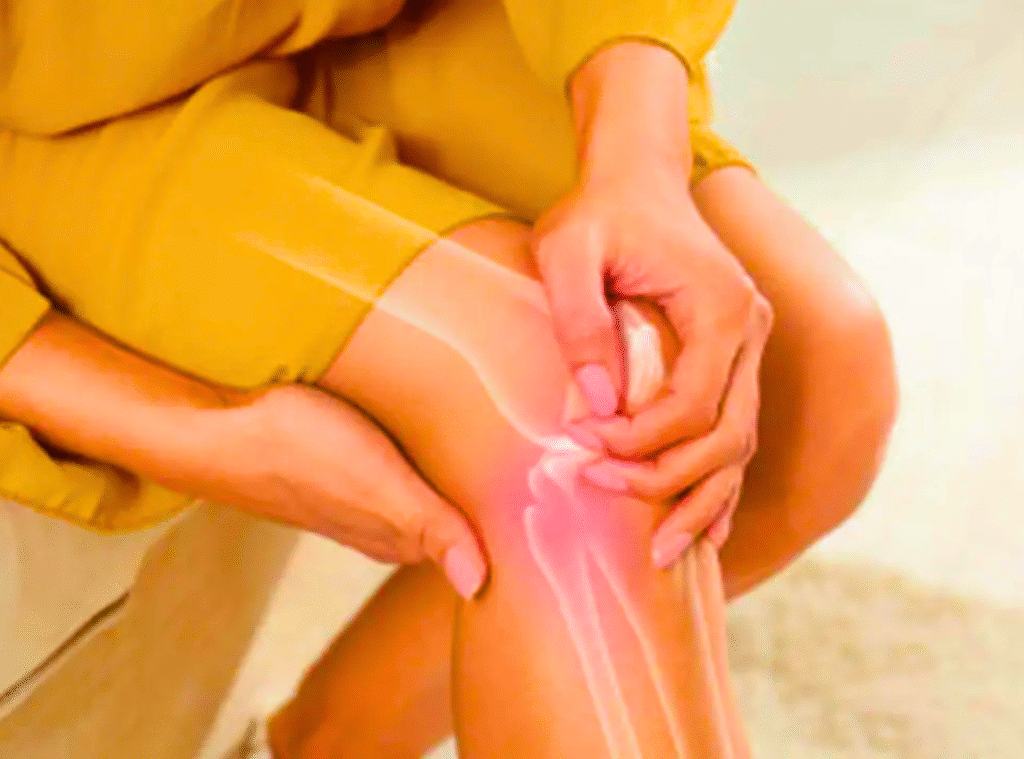
If your knees creak when you climb stairs, your hips ache in the morning, or your fingers feel stiff before your first cup of coffee you are not imagining it, and you are not “just getting old.” What you are experiencing has a name, a hormonal cause, and most importantly a nutritional solution.
This article explains exactly what happens to your joints during menopause, what makes the damage worse, and why something as simple as bone broth soup might be one of the most underrated tools in your recovery.
What Is Cartilage and Why Menopause Destroys It
Before we talk about pain, we need to talk about cartilage.
Cartilage is the smooth, rubbery tissue that covers the ends of your bones inside every joint. Think of it as the cushion between two surfaces that should never touch. When cartilage is healthy, your joints move silently and without pain. When it wears down a process called cartilage degradation or, in its advanced form, osteoarthritis bones begin rubbing against each other, causing inflammation, stiffness, and pain.
Here is what most women are never told: estrogen is one of the primary protectors of cartilage.
Estrogen receptors exist throughout your joint tissue. When estrogen levels are healthy, it actively reduces inflammation inside joints, stimulates the production of collagen (the main structural protein of cartilage), and helps maintain the fluid that lubricates your joints (called synovial fluid).
When estrogen drops during menopause, all of this protective activity slows down sometimes dramatically. Studies have found that cartilage degradation accelerates significantly in the years immediately following menopause. This is not a coincidence. It is biology.
The result: joints that were fine at 44 can suddenly start aching at 48, even without injury, overuse, or dramatic lifestyle changes.
Four Factors That Make Joint Deterioration Worse
Estrogen loss starts the process but several common factors in midlife accelerate the damage and make recovery harder.
Weight Gain
Every extra kilogram of body weight adds approximately three to four kilograms of pressure on your knees with each step you take. During menopause, weight gain especially abdominal weight is extremely common due to hormonal shifts that change how the body stores fat.
This is not about aesthetics. It is about load. Joints that were designed to carry a certain weight now carry more, accelerating cartilage wear every single day.
Lack of Sun Exposure and Vitamin D Deficiency
Vitamin D is essential for bone and joint health. It regulates calcium absorption, reduces joint inflammation, and supports muscle function that protects your joints.
Vitamin D deficiency is extraordinarily common in women over 45, particularly those who work indoors, live in northern climates, or follow sun-avoidance habits. And the problem is invisible you will not feel deficient until the damage is already progressing.
If you have not had your vitamin D levels checked recently, this is one of the most valuable tests you can request from your doctor.
Sedentary Lifestyle
Joints need movement to stay healthy. Cartilage does not have its own blood supply it receives nutrients through a process called imbibition, where the compression and release of movement pumps fluid in and out of the tissue. When you stop moving, cartilage literally begins to starve.
This creates a painful cycle: joints hurt, so you move less; you move less, so cartilage deteriorates further; cartilage deteriorates, so joints hurt more.
The solution is not rest it is the right kind of movement. Low-impact exercise such as swimming, walking, cycling, and gentle strength training actually nourishes cartilage while reducing pain.
Genetic Predisposition
Some women inherit a greater susceptibility to joint problems. If your mother or grandmother developed arthritis early, your risk is higher. Genetics cannot be changed but they can be counteracted. Women with genetic predisposition who maintain an anti-inflammatory diet, healthy weight, and regular movement often delay joint deterioration by years or even decades.
The Nutritional Root of Joint Deterioration Fiber, Collagen, and Protein
Here is something that surprises many women: the standard modern diet is actively dismantling your joints.
Not through toxins. Through absence the absence of the specific nutrients that joint tissue depends on for maintenance and repair.
Fiber Deficiency The Hidden Link to Joint Inflammation
Fiber feeds the beneficial bacteria in your gut. Those bacteria, in turn, regulate inflammation throughout your entire body including your joints. When your diet is low in fiber, the gut microbiome becomes imbalanced, inflammatory signals increase, and joint pain intensifies.
Women experiencing menopausal joint pain often report significant improvement when they increase their daily fiber intake through vegetables, legumes, seeds, and whole grains. This connection between gut health and joint health is one of the most exciting areas of current research.
Collagen The Structural Protein Your Joints Are Made Of
Collagen makes up approximately 70–80% of cartilage by dry weight. It is the scaffolding that gives cartilage its strength, elasticity, and ability to absorb impact.
The problem: your body’s collagen production declines steadily after age 25, and accelerates after menopause due to reduced estrogen. By the time many women reach their late 40s or early 50s, collagen production has already decreased by 30% or more.
You can partially compensate through diet. Foods rich in collagen precursors the amino acids glycine, proline, and hydroxyproline give your body the raw materials it needs to keep producing collagen. The richest dietary source of these amino acids is bone broth.
Protein The Foundation of All Tissue Repair
Joints, muscles, ligaments, tendons all are built primarily from protein. Women in midlife commonly eat insufficient protein, particularly if they have reduced their food intake in an attempt to manage menopausal weight gain.
Without adequate protein, your body cannot repair joint tissue. Older adults generally need more protein per kilogram of body weight than younger adults not less. Current research suggests at least 1.2 grams of protein per kilogram of body weight daily for women over 45.
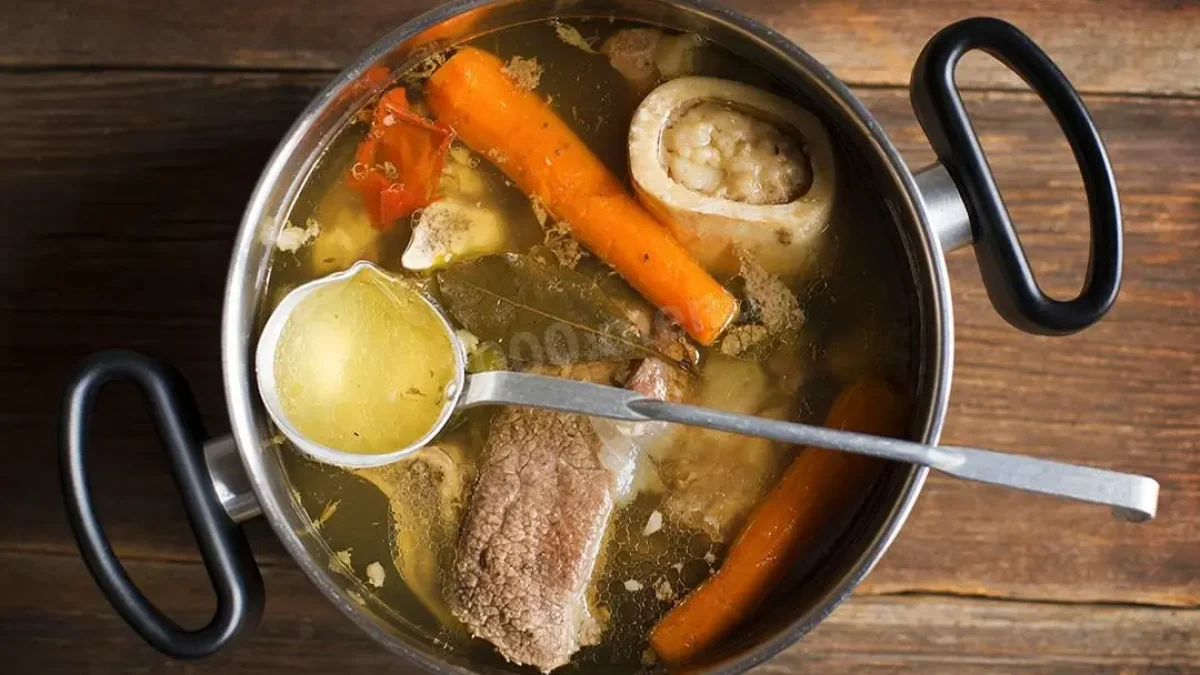
Among all foods discussed above, bone broth deserves special attention because it is the single food that addresses multiple aspects of joint deterioration at once.
Bone broth is made by simmering animal bones (chicken, beef, or fish) for 12 to 24 hours, ideally with a splash of vinegar, which helps extract minerals from the bones into the liquid. The result is a nutrient-dense broth rich in:
- Collagen and gelatin which break down into glycine, proline, and hydroxyproline, the amino acids your body uses to build cartilage
- Glucosamine and chondroitin compounds naturally present in cartilage that have been shown to reduce joint pain and slow cartilage degradation
- Hyaluronic acid a key component of synovial fluid, which lubricates joints
- Calcium, magnesium, and phosphorus minerals essential for bone density
- Glycine an amino acid with anti-inflammatory properties that also supports sleep and gut health
While this is not a randomized controlled trial, the biological mechanisms are well-supported by research.
How to Use Bone Broth
- Drink one cup daily, ideally warm, as a morning or evening ritual
- Use it as the liquid base for soups, stews, and grains instead of water
- Look for versions made from 100% bones without added salt, flavor enhancers, or artificial ingredients
- If making at home: simmer bones for at least 12 hours; the broth should gel when refrigerated that gelatin is the collagen
Pharmacist’s Note Vilma Mendonça, CRF 9930RJ: Bone broth is a food, not a pharmaceutical. It works best as part of a consistent nutritional strategy, not as an isolated remedy. Pair it with adequate protein intake, anti-inflammatory foods (omega-3 rich fish, olive oil, colorful vegetables), vitamin D, and regular movement for best results.
A Practical Starting Point: What to Add to Your Diet This Week
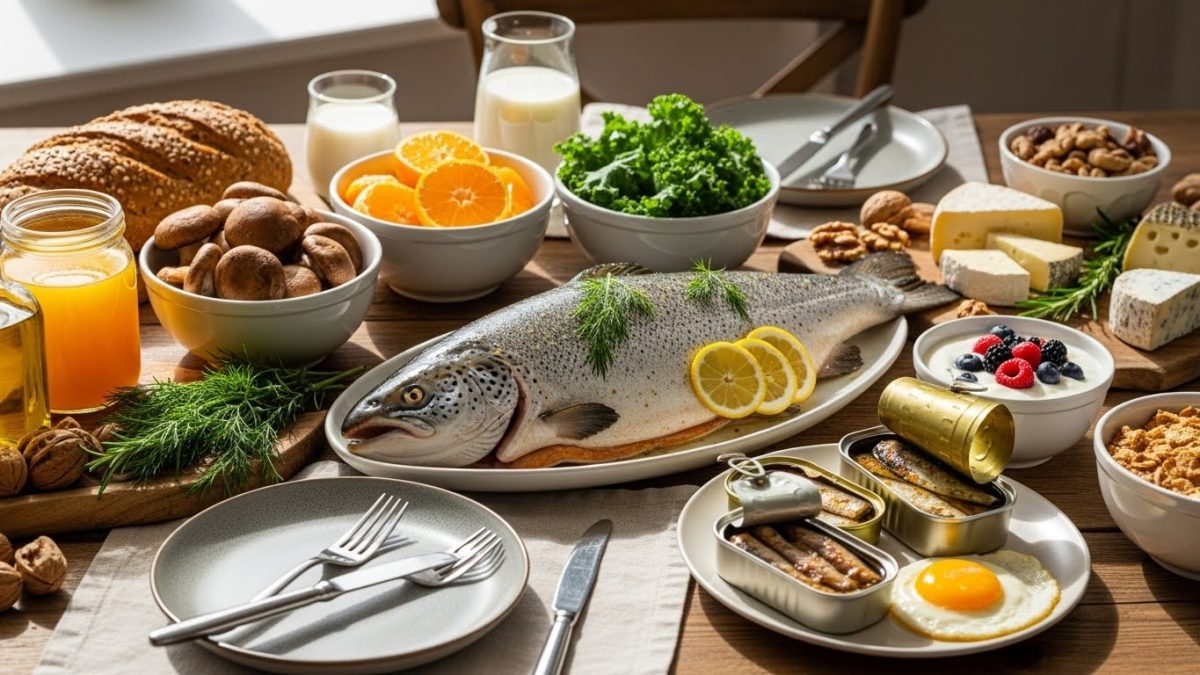
You do not need to overhaul your entire diet overnight. Start with additions, not restrictions:
| Add This | Why |
|---|---|
| 1 cup bone broth daily | Collagen precursors, glucosamine, joint lubrication |
| 30g+ protein at each meal | Tissue repair and maintenance |
| 2 tablespoons ground flaxseed | Fiber + omega-3 anti-inflammatory support |
| Fatty fish 2–3x per week | Omega-3 directly reduces joint inflammation |
| A handful of leafy greens daily | Vitamin C supports collagen synthesis |
| 15–20 minutes of sunlight | Vitamin D activation |
Conclusion
What you can do starting today
Joint pain during menopause is not inevitable and is not irreversible in its early stages. The drop in estrogen starts a process, but your daily choices determine how quickly it progresses.
The most powerful tool you have besides medications and supplements is your diet. A diet rich in nutrients that stimulate collagen production, adequate protein, fiber for gut health, and anti-inflammatory foods can significantly slow cartilage degradation and reduce pain.
Bone broth is not a passing trend. For menopausal women, it is one of the most nutrient-rich and beneficial foods for joints available and one of the oldest remedies in human history.
Scientific studies
Lou et al., 2016 (Menopause journal) 860 mulheres analisadas por MRI. Comprova diretamente que o desgaste da cartilagem do joelho é significativamente pior após a menopausa e que a deficiência de estrogênio é o fator de risco. Perfeito para a Seção 1 do artigo.
Christgau et al., 2004 (Menopause journal) Demonstra que a supressão do estrogênio acelera a degradação da cartilagem em mulheres pós-menopáusicas e que essa degradação pode ser revertida. Reforça toda a argumentação do artigo.
AI Images
3 Responses