A Pharmacist’s Complete Guide
Reviewed by Pharmacist Vilma Mendonça, CRF 9930RJ — Specialist in Phytotherapy and Homeopathy
This post contains affiliate links. As an Amazon Associate I earn from qualifying purchases at no extra cost to you
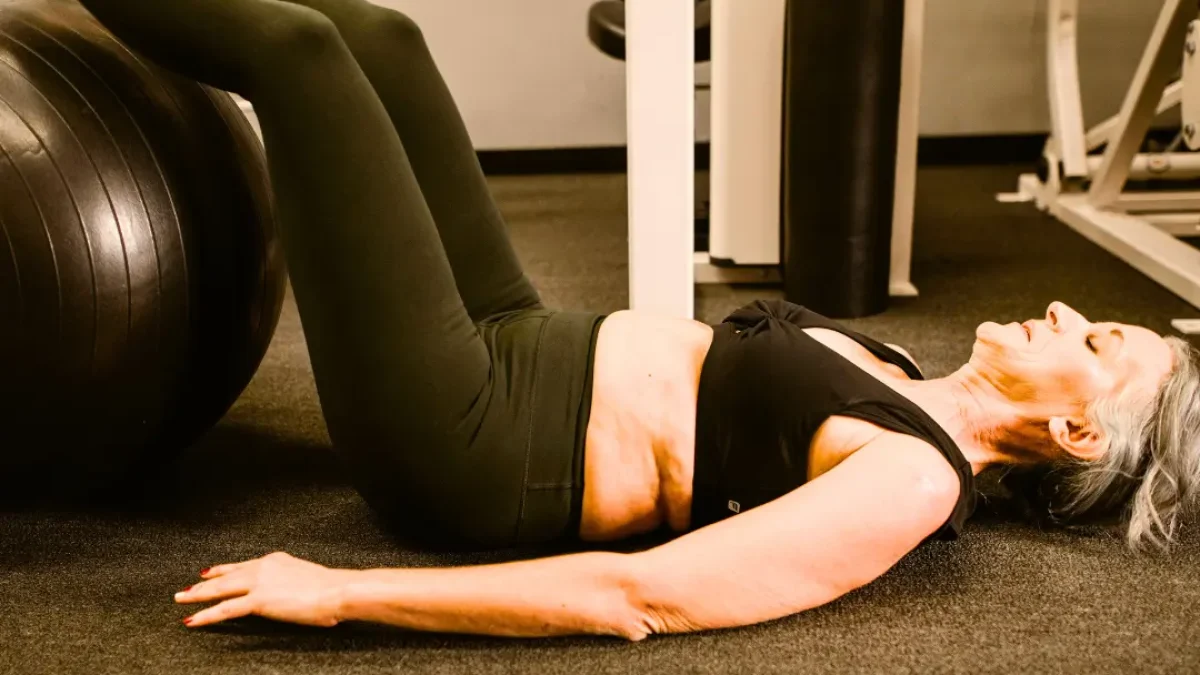
Your hips hurt. You know movement should help, but every time you try, something hurts more, or you just don’t know where to start. Resting seems safer. But in this case, resting is making things worse.
Here’s the truth about hip pain during menopause: the right exercise is not only safe, it’s one of the most effective treatments available. Stronger muscles around the hip joint mean: less pressure on the bursa, less strain on the tendons, and less pain. Not eventually. In weeks.
This guide explains exactly which exercises work, which to avoid. Create a routine that protects your hips. In the long term, based on the same hormonal understanding that explains why the pain started. Always seek professional help if you have any questions or pain.
Why Exercise Is the Best Medicine for Menopausal Hip Pain
Before we address the exercises, it’s important to understand why the movement works.
The Muscle-Joint Connection
The hip joint doesn’t support itself. It depends on a network of muscles, primarily the gluteus medius, gluteus maximus, hip abductors, and core muscles, to distribute the load. Maintaining alignment is important to protect the bursa and tendons from excessive friction.
When these muscles weaken, which happens naturally with the drop in estrogen during menopause, and is accelerated by inactivity, the hip becomes mechanically unstable. The bursa, which was designed to cushion the friction between the tendons and the bone, begins to absorb forces it was never designed to withstand on its own. Inflammation follows. Pain follows.
Strengthening the muscles around the hip is not only helpful. It’s the most direct and lasting solution to the underlying mechanical problem in most menopausal hip pain.
Evidence Supporting the Effectiveness of Exercise for Hip Pain During Menopause
A growing body of research confirms that targeted strengthening of the gluteal and hip abductor muscles significantly reduces pain and improves function in women with trochanteric bursitis and hip tendinopathy, the two most common causes of hip pain during menopause. Results are generally measurable within 6 to 12 weeks of consistent training.
An Important Caveat: Not All Exercise Helps
Some exercises worsen hip pain. High-impact activities, movements that directly compress the bursa, and exercises that overload the iliotibial band can aggravate inflammation and delay recovery.
Knowing which exercises to do and which to avoid is just as important as exercising.
Exercises to avoid if you have hip pain during menopause.
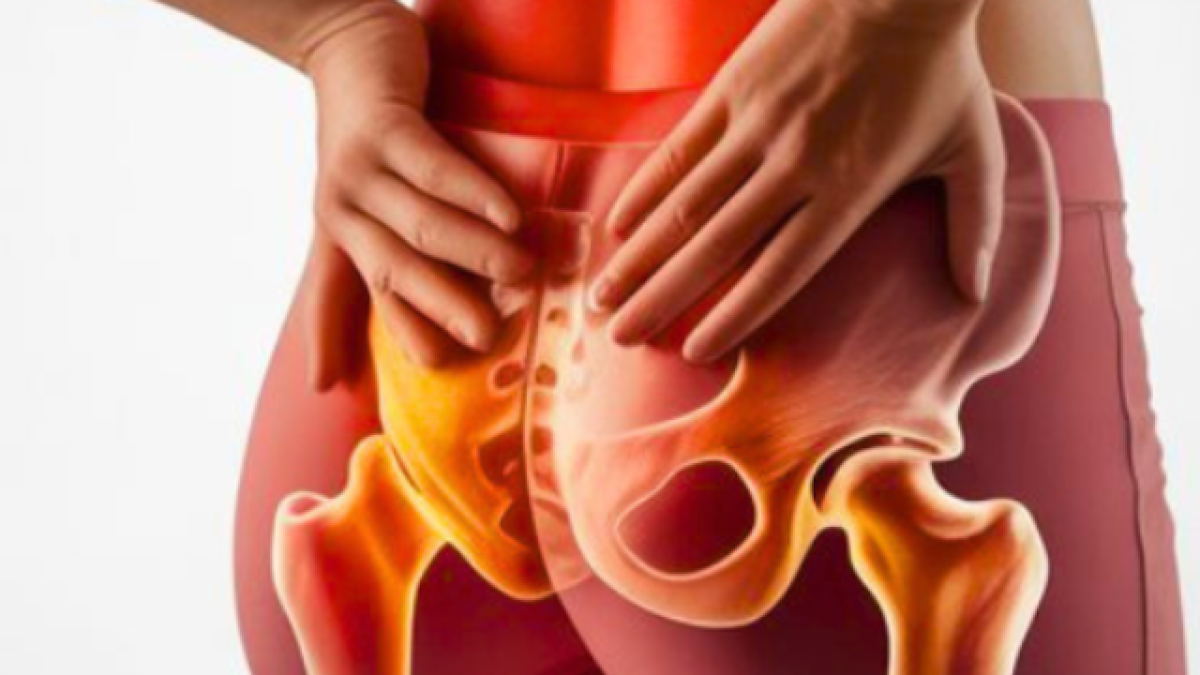
Before the good news, here’s a list of things you need to know:
What worsens hip pain
Running on hard surfaces: the high impact compresses the hip joint and irritates the bursa. If you enjoy running, switch to grass or a treadmill and reduce the volume.
Crossing your legs while sitting: this position puts the hip in internal rotation and adduction, compressing the bursa directly.
Avoid this position completely during recovery.
Lateral leg raises with excessive range of motion. When performed incorrectly or with too much range of motion, these raises can actually increase tension in the iliotibial band and worsen bursitis.
Strets that pull the hip into deep adduction. Crossing the leg over the midline during stretches compresses the bursa.
The classic “pigeon pose” in yoga, performed aggressively, can worsen trochanteric bursitis.
Hip flexor stretches in full extension. If tendon involvement is present, aggressive stretching of the hip flexors may increase pain instead of relieving it.
The Best Exercises for Hip Pain During Menopause
Cardiovascular exercises are important for overall health and for managing menopausal symptoms. But the type of exercise makes all the difference when you have hip pain.
Best Options Swimming and water aerobics
The best option for hip pain. Water supports body weight, eliminating joint compression and allowing full range of motion. Highly recommended during flare-ups.
Cycling (stationary or outdoor). It’s low-impact and excellent for activating hip muscles without compressing the bursa. Adjust the saddle height so that the knee doesn’t fully extend at the bottom of the pedal stroke.
Walking on soft surfaces grass, trail, or treadmill. Flat terrain. Avoid uphill initially, as inclines increase lateral stress on the hip.
Elliptical: Low-impact and good for maintaining cardiovascular fitness without the compression of running.
What to Monitor
If any cardiovascular activity causes hip pain, it’s worth observing. If it lasts more than 30 minutes after stopping, understand why. Reduce the intensity or switch to a gentler option, or seek medical advice. Some discomfort during activity is acceptable; sharp pain or prolonged pain after activity is not a good sign.
Suplementos nutricionais
Supplements such as magnesium glycinate help relax the body’s muscles and blood vessels.
Vitamin D is essential for bones, joints, and cartilage.
Building Your Weekly Routine

Sample Weekly Plan
Monday
Strengthening Phase 2–3 (30 min)
Tuesday – Swimming or walking (20–30 min)
Wednesday
Strengthening Phase 2–3 (30 min)
Thursday
Rest or light stretching only
Friday
Strengthening Phase 2–3 (30 min)
Saturday
Swimming, cycling, or walking
Sunday
Rest only, stretching only
Key Principles
Consistency over intensity. Three moderate sessions per week, consistently, will produce better results than one intense session. The hip adapts gradually.
Warm up before each session. 5 minutes of light walking or the Phase 1 exercises before any strengthening work.
Never train with acute pain. Mild discomfort is acceptable. Sharp, stabbing pain or pain that worsens during exercise means stop and rest. Progress gradually. Add resistance or repetitions only when the current level is comfortable, not before.
If you can’t follow this routine or don’t enjoy it, prepare something you like best and do it.
When Exercise Is Not Enough
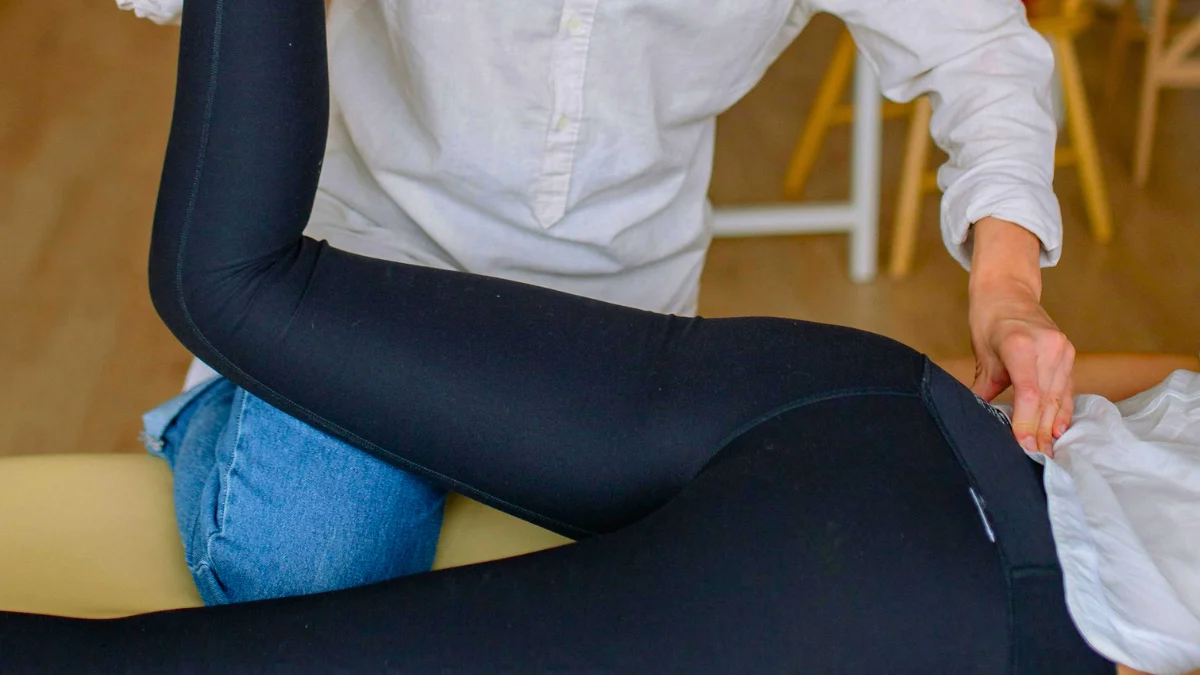
Exercise is highly effective for mild to moderate hip pain but some situations require medical evaluation:
- Pain severe enough to limit walking or daily activities
- Pain that is not improving after 6 weeks of consistent exercise
- Swelling, warmth, or redness around the hip joint
- Pain that radiates to the groin or down the leg
- Night pain severe enough to consistently interrupt sleep
In these cases, physiotherapy, ultrasound-guided injection, or evaluation for hormone therapy may be appropriate next steps.
Pharmacist’s Note Vilma Mendonça, CRF 9930RJ: Exercise works best as part of a comprehensive approach. For best results, combine the routine above with an anti-inflammatory diet, omega-3 supplementation, magnesium glycinate at night, and adequate vitamin D levels. Each intervention supports the others.
Frequently Asked Questions
How long does it take to notice improvement?
Most women notice a significant reduction in pain within 4 to 6 weeks of consistent exercise.
Should I exercise during a flare-up?
During an acute flare-up with significant pain, reduce exercise to only Phase 1 gentle mobility and form-4 stretching. Swimming is permitted. Avoid any type of strengthening until the flare-up subsides.
Can I do yoga for hip pain?
Some yoga poses are helpful, particularly those that gently stretch the piriformis and hip flexors. Avoid deep hip adduction poses (such as the pigeon pose performed aggressively) and poses that place the hip in extreme internal rotation.
Summary Your Starting Point Today
Hip pain during menopause is a mechanical and hormonal problem. Strengthening the muscles that support the hip is the most effective, long-lasting, and affordable treatment available.
Start today:
Perform figure-of-4 stretches morning or night.
Add hip raises: 3 sets of 12 repetitions, every other day.
Add resistance band exercises.
Walk for 20 minutes on a soft surface daily.
In 4 weeks:
Progress to hip raises and lateral walks with a resistance band.
Add swimming or cycling for cardiovascular exercise.
Monitor your pain on a scale of 1 to 10 weekly.
The hip that hurts today can become significantly stronger and less painful in 8 weeks. The investment is 30 minutes, three times a week.
Scientific References
- Mellor R, Bennell K, Grimaldi A, et al. Education plus exercise versus corticosteroid injection use versus a wait and see approach on global outcome and pain from gluteal tendinopathy: prospective, single blinded, randomised clinical trial. BMJ. 2018;361:k1662. doi:10.1136/bmj.k1662 – PubMed
- Sniekers YH, Weinans H, Bierma-Zeinstra SM, van Leeuwen JP, van Osch GJ. Animal models for osteoarthritis and their relevance to clinical disease. Joint Bone Spine. 2008;75(5):589–94. Confirms estrogen’s protective role in periarticular tissue and acceleration of degeneration post-menopause. PubMed
- Image: IA and Pexels
One Response