

Why Does Inflammation Increase During Menopause?
Many women are surprised when joint pain, stiffness, bloating, and constant discomfort begin during menopause. While hot flashes are widely discussed, inflammation is one of the most overlooked changes that occur as estrogen levels decline.
Understanding how menopause affects inflammation and how natural anti-inflammatory strategies may help can be an important step toward improving comfort, mobility, and overall wellbeing during this stage of life.
https://pt.pinterest.com/pin/1023231977851919861
Natural Anti-Inflammatories in Menopause: How to Reduce Pain, Inflammation, and Discomfort Safely
Menopause is often associated with hot flashes and hormonal changes, but what many women don’t realize is that this phase of life is also closely linked to chronic low-grade inflammation. As estrogen levels decline, the body loses part of its natural anti-inflammatory protection, which can lead to joint pain, muscle stiffness, abdominal bloating, fatigue, and overall physical discomfort.
For this reason, many women look for natural anti-inflammatory solutions to support their health during menopauseespecially those who prefer non-hormonal approaches. When used correctly and with professional guidance, natural anti-inflammatories can be valuable allies in improving comfort and quality of life.
👉 Related article: https://mariahchic.com/menopause/natural-remedies-and-menopause-symptoms
Why Does Inflammation Increase During Menopause?
Estrogen plays an important role in regulating inflammatory processes in the body. During menopause, declining estrogen levels are associated with increased production of pro-inflammatory cytokines, which can intensify pain and stiffness, particularly in joints and muscles.
This inflammatory shift is linked to:
-
Joint and muscle pain
-
Morning stiffness
-
Abdominal inflammation and bloating
-
Reduced physical energy
-
Increased risk of chronic conditions
Understanding this connection helps explain why so many women experience new or worsening discomfort during this stage of life.
https://www.youtube.com/shorts/tErJk31LOtY
What Are Natural Anti-Inflammatories?

Natural anti-inflammatories are substances derived from foods, plants, or natural compounds that help reduce inflammation, oxidative stress, and immune system overactivation. In menopause, they are often used as supportive strategies, not replacements for medical care.
They may come from:
-
Anti-inflammatory foods
-
Dietary supplements
-
Herbal medicines (phytotherapy)
-
Bioactive plant compounds
👉 Related article: https://mariahchic.com/menopause/phytohormones-for-menopause
Key Natural Anti-Inflammatories Studied in Menopause
Omega-3 Fatty Acids (EPA and DHA)
Omega-3s are among the most studied natural anti-inflammatory compounds. They help regulate inflammatory pathways and may support joint comfort, cardiovascular health, and overall metabolic balance areas that become especially important after menopause.
Curcumin (Turmeric)
Curcumin has well-documented anti-inflammatory properties and acts on key inflammatory pathways. It may support joint and muscle comfort and help reduce systemic inflammation, particularly when combined with piperine for better absorption
Isoflavones (Soy and Red Clover)
Isoflavones are plant compounds with mild estrogen-like activity. Beyond their hormonal effects, they may contribute indirectly to inflammation control and overall menopausal symptom relief.
Green Tea (EGCG)
Green tea is rich in antioxidants such as EGCG, which help combat oxidative stress. During menopause, green tea may support inflammatory balance and contribute to metabolic and cardiovascular health.
Hibiscus (Hibiscus sabdariffa)
Hibiscus stands out as a powerful natural diuretic, helping reduce abdominal bloating a common complaint during menopause. By increasing urinary flow, hibiscus supports the elimination of excess fluids and toxins, often leading to a noticeable reduction in abdominal discomfort.
Anti-Inflammatory Nutrition During Menopause
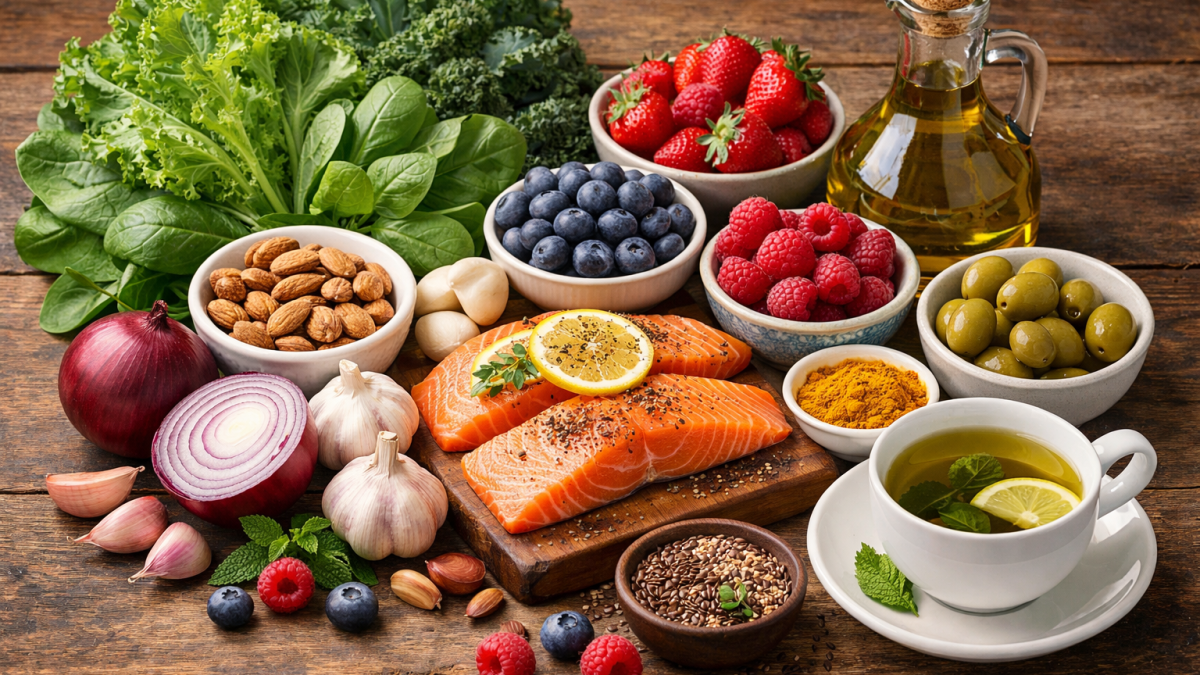
Nutrition plays a central role in controlling inflammation. An anti-inflammatory dietary pattern during menopause includes:
-
Fresh fruits and vegetables
-
Fatty fish rich in omega-3
-
Olive oil as a primary fat source
-
Whole, minimally processed foods
At the same time, it is essential to limit:
-
Ultra-processed foods
-
Excess sugar
-
Alcohol
-
Trans fats
Dietary choices directly influence inflammation, weight balance, and long-term health outcomes during menopause.
Herbal Supplements: What Can Be Considered?
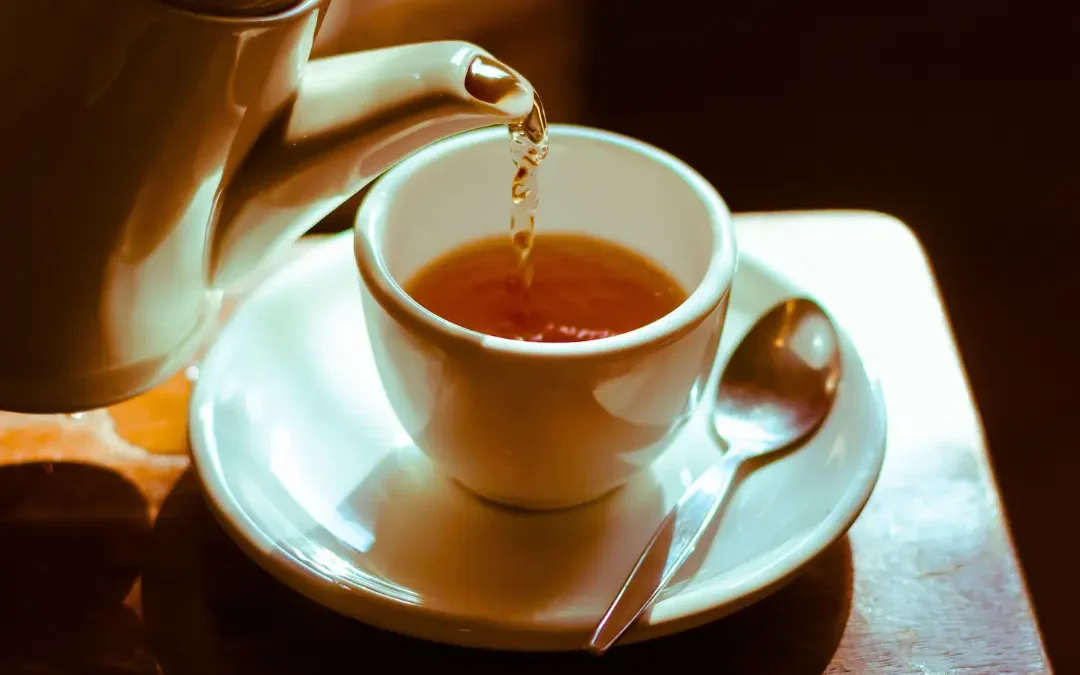
Herbal supplements may be considered as complementary support, particularly when inflammation is associated with anxiety, stress, or mood changes factors that can indirectly affect body weight and inflammation.
Common categories include:
-
Adaptogenic plants
-
Compounds that support appetite control
-
Substances that help regulate cortisol levels
Hibiscus may help reduce abdominal swelling through its diuretic effect, while green tea contributes antioxidant and anti-inflammatory compounds. These products can be found as teas or capsules and should always be used with professional guidance.
The Importance of Medical Follow-Up
Although natural anti-inflammatories can be beneficial, menopause is a phase that requires individual medical assessment. Hormonal levels, metabolic health, and inflammatory markers should be monitored to ensure safe and effective use of supplements.
Natural approaches work best when integrated into a broader health strategy guided by a healthcare professional.
👉Related article: https://mariahchic.com/menopause/menopause-natural-alternatives
Conclusion
Natural anti-inflammatories can play an important role in supporting comfort and wellbeing during menopause. While they do not replace medical care, they can complement lifestyle changes and professional treatment plans. With the right guidance, menopause can be managed with greater balance, comfort, and quality of life.
This article is intended to add to your knowledge and should never replace the advice of your doctor. If you have any questions, consult your doctor and pharmacist.
Scientific Studies
-
Proinflammatory and anti-inflammatory cytokine changes related to menopause
Published in 2015 – Journal of Reproductive Immunology -
Efficacy of plant-derived dietary supplements in improving overall menopausal symptoms in women: A systematic review and meta-analysis
Published in 2024 – Phytotherapy Research
Written and reviewed by: Dr. Vilma Mendonça – Pharmacist
Images and photos – Pexels





1 Comment
[…] https://mariahchic.com/menopause/natural-anti-inflammatories […]