Reviewed by Pharmacist Vilma Mendonça, CRF 9930RJ — Specialist in Phytotherapy and Homeopathy
This post contains affiliate links. As an Amazon Associate I earn from qualifying purchases at no extra cost to you

You are 38, 40, 43 years old. Your menstrual cycles have changed sometimes shorter, sometimes longer, sometimes just different. You sleep poorly.
You feel anxious for no apparent reason. Your mood shifts at a speed that frightens you. You gain weight without changing anything in your diet. Your concentration is not what it used to be.
You go to the doctor. Tests are ordered. The results come back “within normal range.” And you leave the office without an answer but still feeling everything you felt before.
If this resonates with your experience, there is a word that probably nobody has said to you yet: perimenopause.
What Is Perimenopause — The Definition That Actually Matters
Perimenopause is the hormonal transition that precedes menopause. It is the period during which the ovaries gradually begin to reduce the production of estrogen and progesterone and the body. Which has spent decades functioning with those hormones at stable levels, must adapt to a new reality.
The name comes from the Greek peri, meaning “around” or “near.” It is, literally, the time around menopause.
What Is the Difference Between Perimenopause and Menopause?
This is the most common source of confusion and it is important to clear it up.
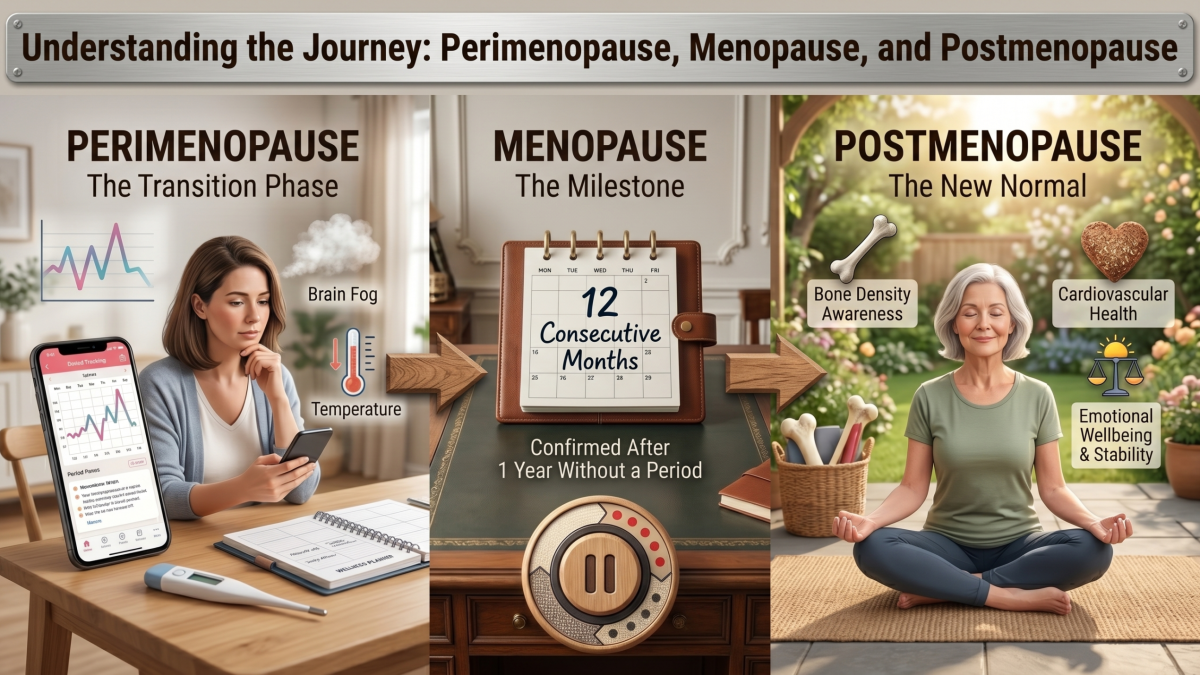
Menopause is a single event: the day you complete 12 consecutive months without a menstrual period. It is a milestone, not a phase.
Perimenopause is the transitional period that leads up to that milestone. It can last anywhere from 2 to 12 years with an average of 4 to 8 years. During this time, hormones fluctuate erratically, cycles become irregular, and symptoms can be intense and unpredictable.
Postmenopause begins after 12 months without a period and lasts for the rest of life.
The distinction matters because perimenopause symptoms are often more chaotic than those of menopause itself precisely because of the hormonal instability characteristic of this phase.
When Does Perimenopause Start?
Here is the piece of information that surprises most women: perimenopause can begin at 35 years old.
The most common age of onset is between 40 and 44, with menopause occurring at an average age of 51. But a study published in npj Women’s Health with more than 4,400 women in the United States found significant perimenopause symptoms in women between 30 and 45 a group that is rarely identified or treated correctly.
Factors that may bring perimenopause on earlier:
- Smoking (advances onset by 1 to 2 years)
- Family history of early menopause
- Previous pelvic surgeries
- Chemotherapy or radiation treatment
- Very low body mass index
- Chronic high stress
Perimenopause Symptoms — Beyond What You Have Already Heard
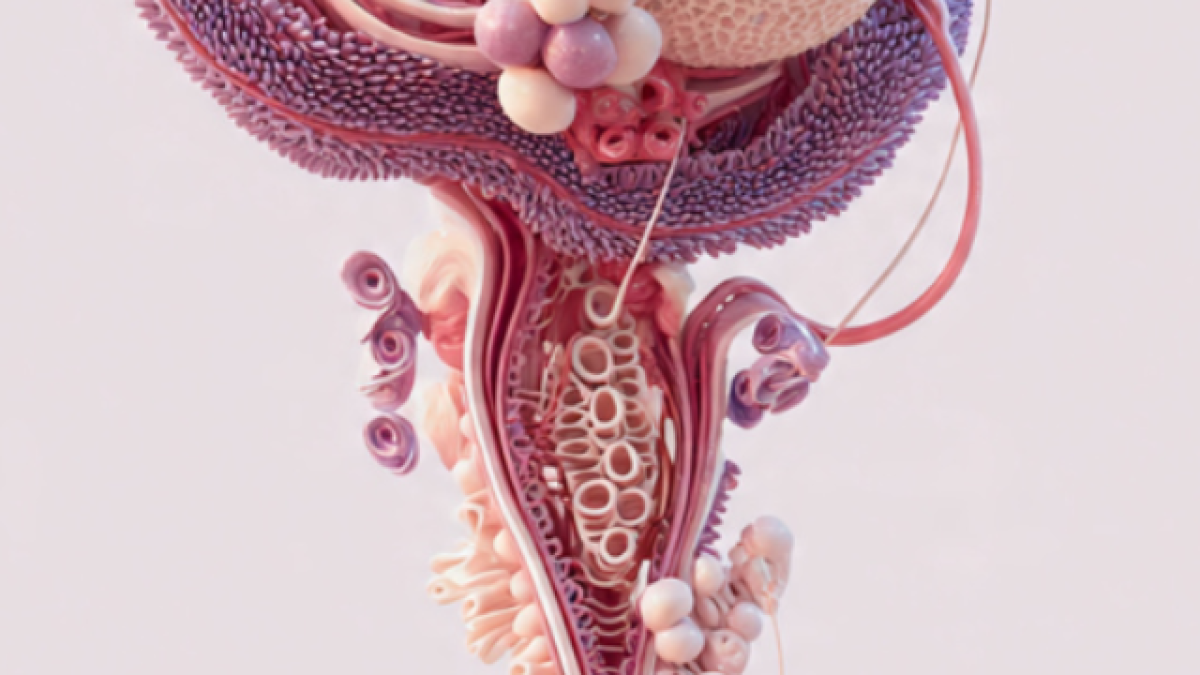
The standard list of menopause symptoms usually mentions hot flashes, night sweats, and menstrual irregularity. But perimenopause has a much broader presentation and many symptoms that women never associate with hormones.
Menstrual Symptoms
- Shorter cycles (fewer than 21 days) or longer cycles (more than 35 days)
- Heavier or lighter periods than usual
- Spotting between cycles
- Cycles that simply stop for 2 to 3 months and then return
- More intense PMS than before
The clinical criterion that defines entry into late perimenopause is the occurrence of at least one cycle with a delay of 60 days or more.
Vasomotor Symptoms
- Hot flashes which can occur even before menstrual irregularity begins
- Night sweats that interrupt sleep
- Chills alternating with heat sensations
- Facial flushing and heart palpitations
Psychological and Cognitive Symptoms
This is the group of symptoms that causes the most confusion and the one that most frequently leads women to receive incorrect diagnoses of generalized anxiety disorder or depression.
- New or worsened anxiety, especially at night
- Irritability and rapid mood swings
- Feeling “on edge” without an apparent cause
- Brain fog difficulty concentrating, memory lapses, difficulty finding words
- Persistent depression or sadness
An important fact: women in perimenopause are 2 to 4 times more likely to experience a major depressive episode than at other stages of life not due to psychological factors, but because of direct hormonal fluctuations affecting neurotransmitters.
Lesser-Known Physical Symptoms
- Joint and muscle pain related to the drop in estrogen, which plays an anti-inflammatory role
- Fatigue that does not improve with rest
- Dry skin and hair loss
- Weight changes and redistribution of fat to the abdomen
- New headaches or more intense migraines
- Vaginal dryness and discomfort during sex
- Urinary urgency and more frequent UTIs
- Frozen shoulder a frequently unrecognized symptom
Why the Blood Test Comes Back “Normal”
This is one of the greatest sources of frustration for women in perimenopause.
The primary test doctors order is FSH (follicle-stimulating hormone). The problem: during perimenopause, FSH fluctuates enormously from week to week. A test done on a day of “low” fluctuation can return perfectly normal even when the woman is in full hormonal transition.
This means a negative test result does not rule out perimenopause. The diagnosis of perimenopause is essentially clinical based on symptoms and the patient’s history, not on a number in a blood test.
What Happens to Hormones During Perimenopause
To understand the symptoms, it is necessary to understand what is happening at the hormonal level.
Progesterone Drops First
Contrary to what many people believe, estrogen is not the first hormone to fall in perimenopause. Progesterone declines first sometimes years before any menstrual irregularity.
Progesterone is the hormone of the second half of the cycle. It has a calming effect on the nervous system, promotes deep sleep, and stabilizes mood. When it begins to drop, the first symptoms to appear are frequently anxiety and sleep disturbance long before hot flashes arrive.
Estrogen Does Not Fall in a Straight Line
A common misconception is to imagine that estrogen simply “keeps dropping” progressively. In reality, during perimenopause, it fluctuates erratically sometimes rising to very high levels, sometimes dropping sharply.
This instability not just the decline itself is responsible for many of the most difficult symptoms of perimenopause: rapid mood changes, sudden hot flashes, and intense PMS.
The Preventive Window of Opportunity
Perimenopause is not just a period of symptoms to be managed. It is a window of opportunity for long-term health.
Growing research shows that lifestyle decisions made during perimenopause. The nutrition, exercise, supplementation, stress management have a significant impact on the risk of cardiovascular disease, osteoporosis, and cognitive decline in the following decades.
It is not an exaggeration to say that perimenopause is one of the most important moments in a woman’s life to invest in preventive health.
Natural Approaches for Perimenopause Symptoms
Anti-Inflammatory Diet as the Foundation
Dietary patterns have a direct impact on the intensity of perimenopausal symptoms.
This is due both to their influence on hormones and the modulation of systemic inflammation.
Prioritize:
- Adequate protein (minimum 1.2g/kg of body weight/day) essential for preserving muscle mass and supporting hormonal synthesis
- Healthy fats olive oil, avocado, fatty fish which are hormonal precursors and anti-inflammatory
- Fiber (25–30g/day) which supports the intestinal estrobolome and estrogen metabolism
- Moderate phytoestrogens flaxseed lignans, soy isoflavones which offer gentle estrogenic support
Reduce:
- Sugar and refined carbohydrates which amplify insulin resistance, already increased by the hormonal decline
- Alcohol which intensifies hot flashes, disturbs sleep, and burdens the liver, responsible for hormone metabolism
- Ultra-processed foods which increase systemic inflammation
Evidence-Based Supplementation for Perimenopause
Pharmacist’s Note Vilma Mendonça, CRF 9930RJ: Supplementation should be individualized. The suggestions below are scientifically grounded, but the appropriate dose and suitability depend on each woman’s clinical history. Always consult a healthcare professional before starting any supplement.
Magnesium glycinate or threonate: Supports sleep, reduces anxiety, and relieves cramps. Magnesium is a cofactor in hundreds of metabolic reactions and deficiency is very common in women over 35.
Vitamin D + K2: Vitamin D supports hormonal balance, immunity, and bone health. It should be checked via blood test the target is 40 to 60 ng/mL.
Omega-3 (EPA and DHA): Reduces systemic inflammation, supports cardiovascular health, and has a positive effect on mood and cognitive function.
Ashwagandha: An adaptogen with evidence for cortisol reduction and improvement of anxiety and sleep quality central symptoms of early perimenopause.
Soy isoflavones (40–80mg/day): For women without hormonal contraindications, these offer gentle estrogenic support and have evidence for reducing hot flashes and improving vaginal tissue hydration.
Exercise The Most Powerful Natural Hormonal Modulator
Regular exercise is possibly the most powerful intervention available for women in perimenopause without a prescription and without side effects.
Strength training (2 to 3 times per week): Preserves muscle mass (which declines with the drop in estrogen), increases insulin sensitivity, improves bone density, and regulates mood through the release of endorphins and BDNF.
Moderate aerobic exercise (3 to 5 times per week): Reduces the frequency and intensity of hot flashes, improves sleep, and protects cardiovascular health.
Yoga and breathing practices: Have specific evidence for reducing anxiety and improving sleep quality in perimenopause — and modulate the cortisol response.
Stress Management The Most Overlooked Factor
Cortisol the stress hormone and estrogen compete for the same hormonal precursors. During periods of chronic stress, the body prioritizes cortisol production which worsens the estrogen decline and intensifies all perimenopause symptoms.
Evidence-based practices for cortisol reduction:
- Strict sleep hygiene (consistent schedules, dark and cool environment)
- Meditation or mindfulness even 10 minutes daily makes a measurable difference
- Contact with nature
- Reduction of digital stimulation, especially at night
When to Seek Medical Help

Natural approaches are effective for many women especially for mild to moderate symptoms. But there are situations where medical evaluation is essential:
- Very heavy or prolonged menstrual bleeding (which may indicate endometrial hyperplasia)
- Symptoms that significantly affect quality of life, work, or relationships
- Symptoms that do not respond to natural approaches after 3 to 6 months
- Signs of clinical depression
- Desire to evaluate Menopause Hormone Therapy (MHT) as an option
Hormone therapy, when correctly indicated and prescribed, is a safe and effective option for many women not a last resort. A conversation with a doctor specializing in women’s menopausal health is well worth it.
Frequently Asked Questions About Perimenopause
Can I still get pregnant during perimenopause?
Yes. As long as there are menstrual cycles even irregular ones ovulation can occur and pregnancy is possible. Contraception should be maintained until 12 months after the last menstrual period.
How do I know if it is perimenopause or stress?
The two can coexist and stress worsens perimenopause symptoms. If symptoms include menstrual irregularity, hot flashes, or night sweats in women over 35, perimenopause should be considered regardless of stress levels.
How long does perimenopause last?
On average, 4 to 8 years. But it can be as short as 2 years or as long as 12. Duration varies according to genetics, lifestyle, and other individual factors.
Do symptoms get worse before getting better?
Often, yes. The most intense transition phase usually occurs in the 1 to 2 years immediately before the last period when hormonal fluctuation is at its most extreme.
Summary: What You Can Do Starting Today
Perimenopause is not a disease. It is a natural biological transition but one that deserves attention, preparation, and active care.
The greatest gift you can give yourself is information. Knowing what is happening in your body transforms frightening symptoms into understandable phenomena. And understandable phenomena can be managed.
If you recognized your symptoms in this article, this is your starting point:
- Track your cycles and symptoms the pattern over time is more informative than any single blood test
- Review your diet with a focus on protein, fiber, and healthy fats
- Prioritize sleep as a health measure not as a luxury
- Introduce resistance training if you are not already doing it
- Consider speaking with a doctor specializing in women’s menopausal health
You are not “getting old.” You are in transition. And there is much that can be done.
But your doctor needs to be close to you to guide this transition.
Related articles you may find helpful:
Scientific References
-
Cunningham AC, Wickham AP, Payne JL, et al. Perimenopause symptoms, severity, and healthcare seeking in women in the US. npj Women’s Health. 2025;3:12. doi:10.1038/s44294-025-00061-3 — Nature
-
Shifren JL, Gass ML; NAMS Recommendations for Clinical Care of Midlife Women Working Group. The North American Menopause Society recommendations for clinical care of midlife women. Menopause. 2014;21(10):1038–1062. doi:10.1097/GME.0000000000000319 — PubMed
IMAGES – PEXELS AND AI
4 Responses